
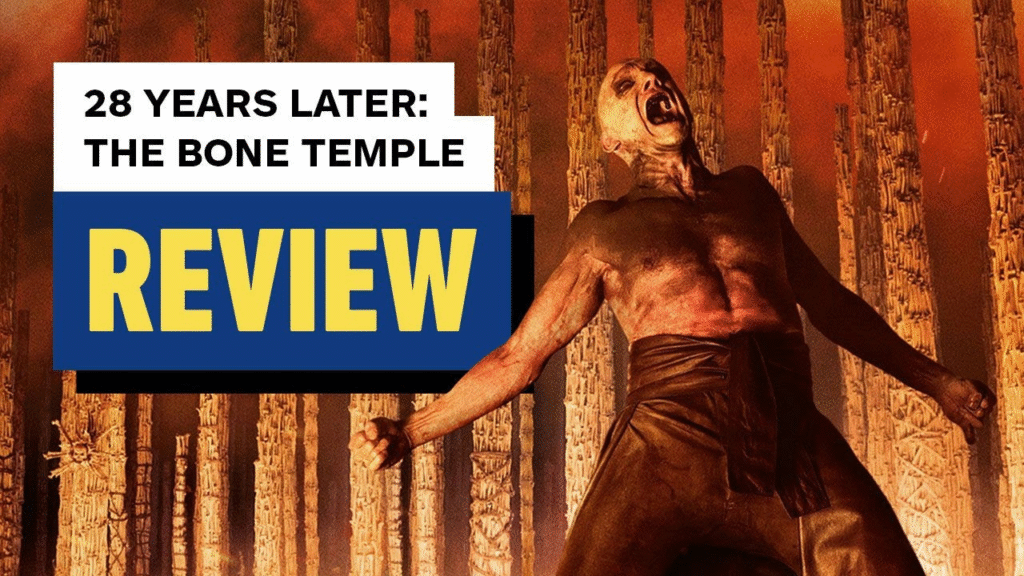
It’s genuinely rare for the fourth film in any franchise to feel like the strongest entry. By the time a series reaches a “fourquel,” fatigue usually sets in — bigger explosions, louder scares, thinner ideas. And yet, against all odds, 28 Years Later: The Bone Temple stands tall as the most compelling, energetic, and unsettling chapter in the long-running post-apocalyptic saga that began back in 2003.
What makes The Bone Temple so effective isn’t that it doubles down on zombies — it actually does the opposite. This film is powerful because it largely pushes the infected into the background and turns its focus where it always should have been: on people, power, belief systems, and the terrifying things humans do when the world collapses.
A Franchise That Finally Grows Up
Created originally by director Danny Boyle and writer Alex Garland, the 28 Days Later universe has always flirted with deeper ideas about society, fear, and survival. With The Bone Temple, now directed by Nia DaCosta, those ideas finally take center stage.
The film picks up immediately after 28 Years Later, following Spike, played with quiet intensity by Alfie Williams. Having left the quarantined safety of Holy Island, Spike ventures onto the mainland, driven by rumors of a doctor — Dr. Ian Kelson — who represents the last fragile hope of morality and order in a shattered world.
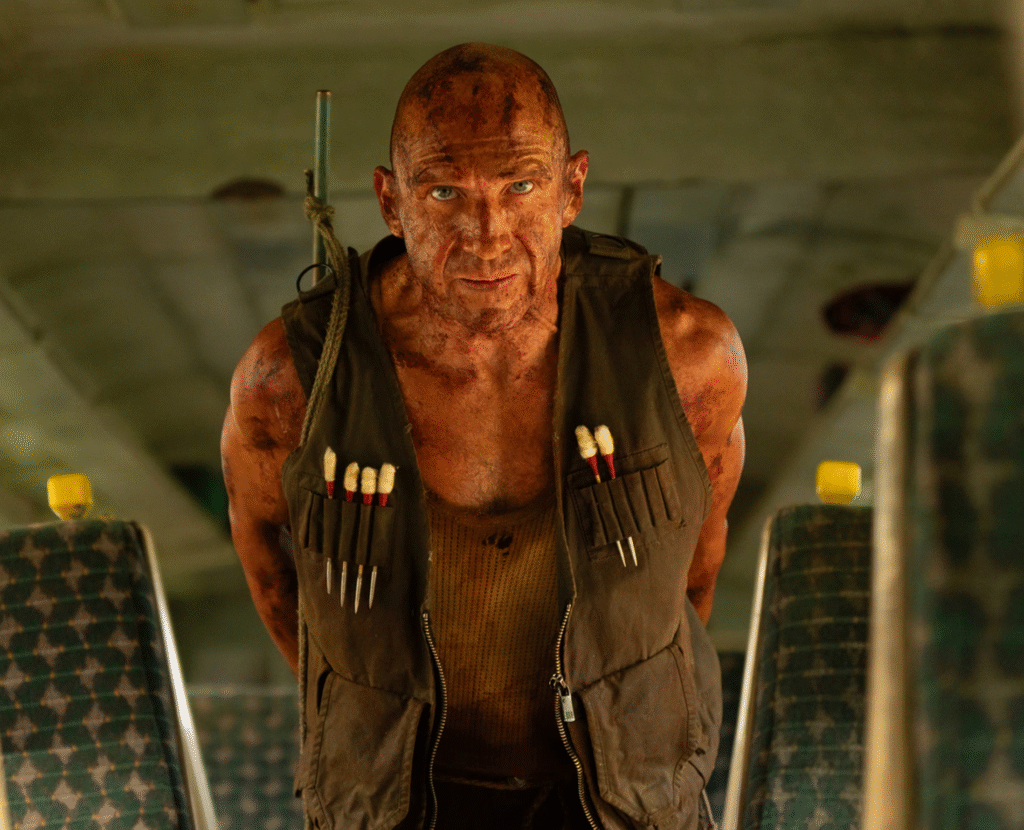
That doctor is played by Ralph Fiennes, and calling his performance memorable would be an understatement.
Ralph Fiennes at His Most Unhinged — and Most Alive
There’s a moment in this film — a moment people will be talking about for years — when Ralph Fiennes dances to Iron Maiden’s The Number of the Beast. It’s feral, theatrical, unhinged, and oddly transcendent. At the screening I attended, the audience was on its feet, half-shocked and half-ecstatic, as if watching a live performance rather than a film scene.
It’s one of the most extraordinary moments of Fiennes’s career. His Voldemort never felt this dangerous, this alive, or this unpredictable.
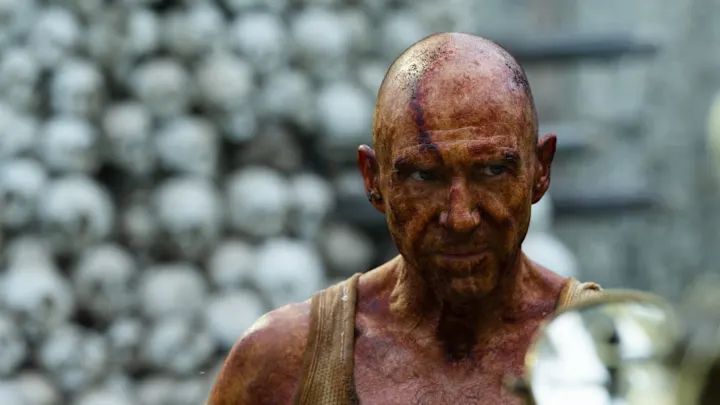
Fiennes’s Dr. Kelson, with his iodine-stained orange skin and gentle, almost Christlike demeanor, is deeply misunderstood by those who cross his path. Yet he is arguably the most humane character in the entire film — a man trying to understand, not destroy, even the most terrifying remnants of the old world.
The Real Monsters Aren’t Infected
What makes The Bone Temple the best entry in the franchise is a bold creative decision: zombies barely matter.
Instead, the true horror comes from a roaming gang of uninfected humans led by Sir Lord Jimmy Crystal, played with disturbing charisma by Jack O’Connell. This Clockwork Orange–style cult is violent, theatrical, and ideologically warped, justifying brutality through a twisted belief system created to preserve Jimmy’s power.
O’Connell is magnetic and horrifying in equal measure. His Sir Lord Jimmy isn’t scary because he’s strong — he’s scary because people believe him.
The group’s bizarre styling, blond wigs, and tracksuits evoke uncomfortable cultural echoes, and while the Jimmy Savile inspiration raises unsettling questions, it also reinforces the film’s core idea: when society collapses, the myths we cling to become grotesque distortions of the past.
Watching Spike encounter this group is genuinely harrowing. Through his eyes, we witness how cruelty becomes normalized, ritualized, even celebrated.
The Alpha Zombie Who Isn’t What He Seems
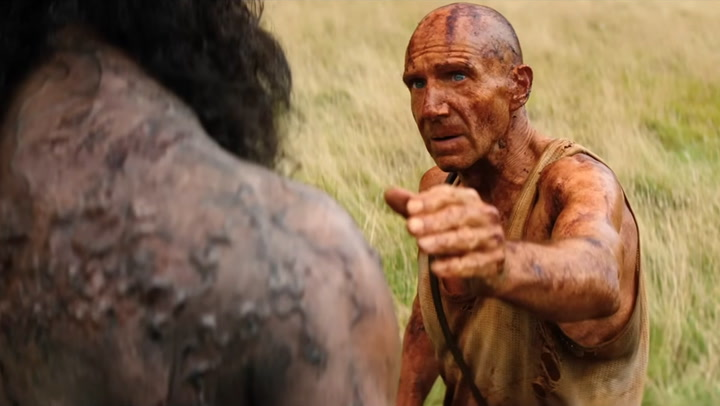
The film’s one truly important infected character, an alpha zombie named Samson (played by Chi Lewis-Parry), is fascinating precisely because he is evolving. Dr. Kelson’s attempts to understand Samson — rather than simply kill him — reveal unexpected depth, vulnerability, and tragedy.
Samson isn’t just a monster. He’s a symbol of transformation, of what happens when violence, fear, and survival blur into something unrecognizable.
Again, the film reminds us: monsters are more interesting when they reflect us.
Why This Film Hits So Hard
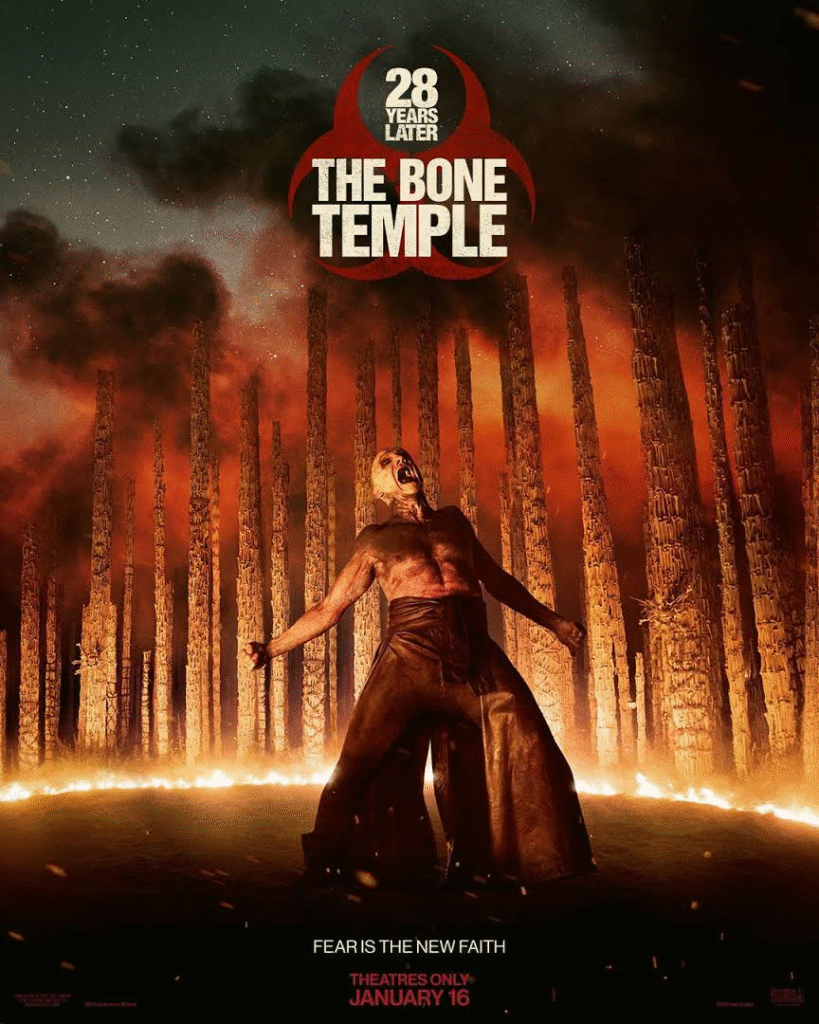
28 Years Later: The Bone Temple is gruesome, yes — but it’s also alive with energy, tension, and genuine emotional stakes. It doesn’t rely on jump scares or familiar apocalypse clichés. Instead, it creates real human jeopardy, where belief systems clash and power corrupts absolutely.
It’s proof that zombie stories don’t fail because zombies are boring — they fail when filmmakers forget that humans are the real story.
A Brief Reflection on Independence and Why It Matters
This brings me to something seemingly unrelated — but thematically connected.
In 1936, John Scott, son of Guardian editor C.P. Scott, did something almost unthinkable. He gave up personal wealth and control of the Guardian, placing it under the Scott Trust to ensure its editorial and financial independence forever.
That decision means the Guardian cannot be bought. Not by billionaires. Not by private equity. Not by tech moguls seeking influence.
This independence allows journalists to challenge power, report freely, and tell uncomfortable truths — much like The Bone Temple dares to challenge comfortable genre expectations.
But independence comes at a cost.
Without shareholders, the Guardian depends on readers — including readers from India — who believe journalism should serve the public, not profit margins or political agendas.
If you believe the stories you read should be shaped by editors and reporters, not ultra-wealthy tech interests, then supporting independent journalism isn’t charity — it’s participation.

Best Flight Booking Tips 2026: Find Cheap Flights & Save Money

Trending Now 2026: Top Viral Stories, Internet Trends & Social Media Buzz
Best Bollywood Movies to Watch in 2026: Latest Releases & Upcoming Films

Kids’ Fashion Trends: The Ultimate Guide to Stylish Outfit Ideas

The Ultimate Guide to Flights & Transportation: Tips, Options & Travel Planning

The Ultimate Guide to Insurance: Types, Benefits, Coverage & Tips
Final Thought
28 Years Later: The Bone Temple succeeds because it understands something essential: horror isn’t about monsters chasing us — it’s about people choosing who they become when rules disappear. By sidelining zombies and amplifying human conflict, the film feels raw, urgent, and disturbingly relevant.
And just as this film benefits from creative independence, so too does journalism. Whether in cinema or media, stories matter most when they aren’t owned by power.
This article reflects personal viewing impressions and independent commentary. Release dates, interpretations, and opinions are subject to individual perspective. This content is intended for informational and editorial purposes only.
#28YearsLater #TheBoneTemple #FilmReview #PostApocalypticCinema #RalphFiennes #JackOConnell #ZombieMovies #DannyBoyle #AlexGarland #NiaDaCosta #IndependentJournalism #MediaIndependence #GuardianNews #HumanStories #Carrerbook #Anslation