
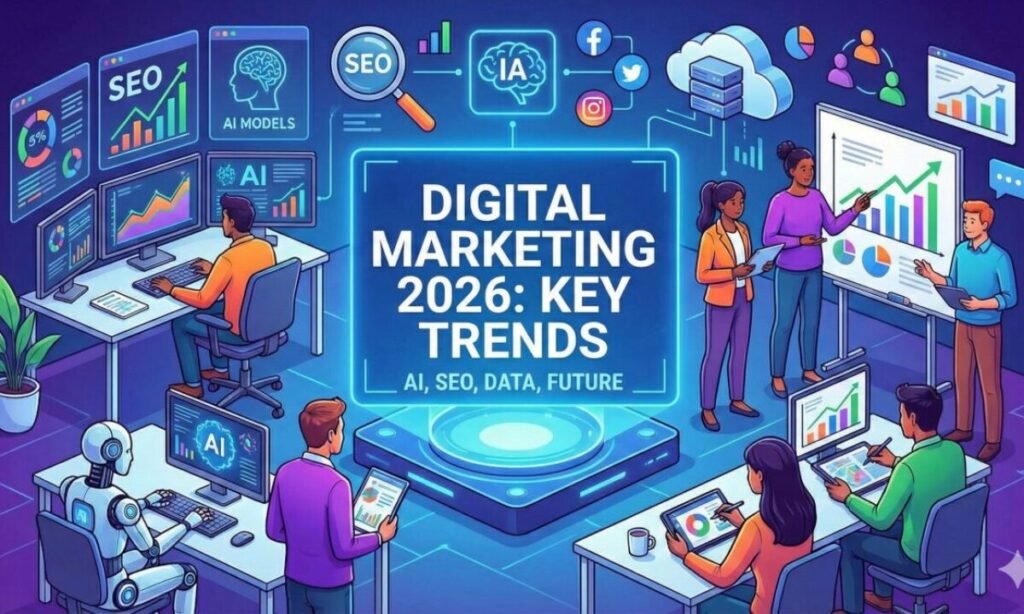
Social media in 2026 is defined by three structural shifts: platforms functioning as primary search engines, the primacy of community over virality, and a growing consumer backlash against AI-generated content. According to recent reports, social networks are now the main media channel for audiences aged 16 to 34 for online brand research, with social scrolling outpacing traditional text-based search as the primary discovery engine for younger adults. Hootsuite’s 2026 Social Trends report found that nearly a third of consumers say they are less likely to choose a brand that uses AI-generated ads, making human-led storytelling a critical differentiator even as AI tools become standard for research, analytics, and content optimization.
Brand intelligence and strategy
In an era of devalued third-party data, social platforms are becoming powerful sources of consent-based first-party data.
Lead gen ads, subscriptions, gated content, live events, and DMs all provide direct signals about intent, interests, and sentiment to pair with CRM data.
Additional brand intelligence comes from that use AI to surface valuable market and consumer intelligence in near real time. Instead of reviewing analytics after a campaign for lessons learned, brands can now use social listening to anticipate trends, respond to micro-shifts as they happen, and adapt messaging on the fly.
That level of insight is particularly useful in a social ecosystem where users maintain multiple identities across apps. These “side quests” allow users to explore different interests, values, and communities. To stay relevant, brands must follow suit.
LinkedIn’s increasingly youthful audience, combined with new video features, offers increased opportunities for meaningful engagement. And Substack is no longer just a platform for newsletters – it’s a true social media platform complete with a social feed, inbox, and profiles that feel like Threads or Bluesky.
AI Becomes a Default Part of Social Marketing
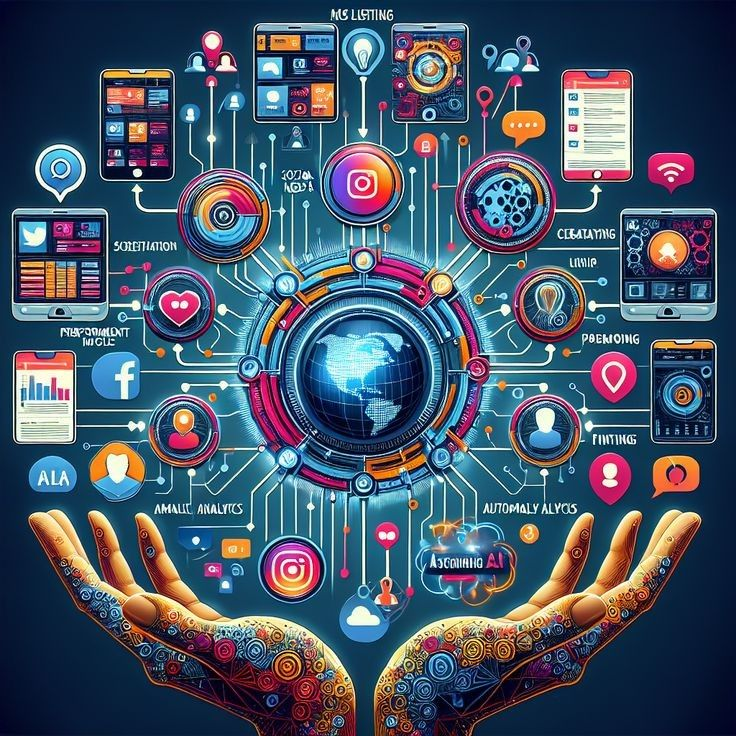
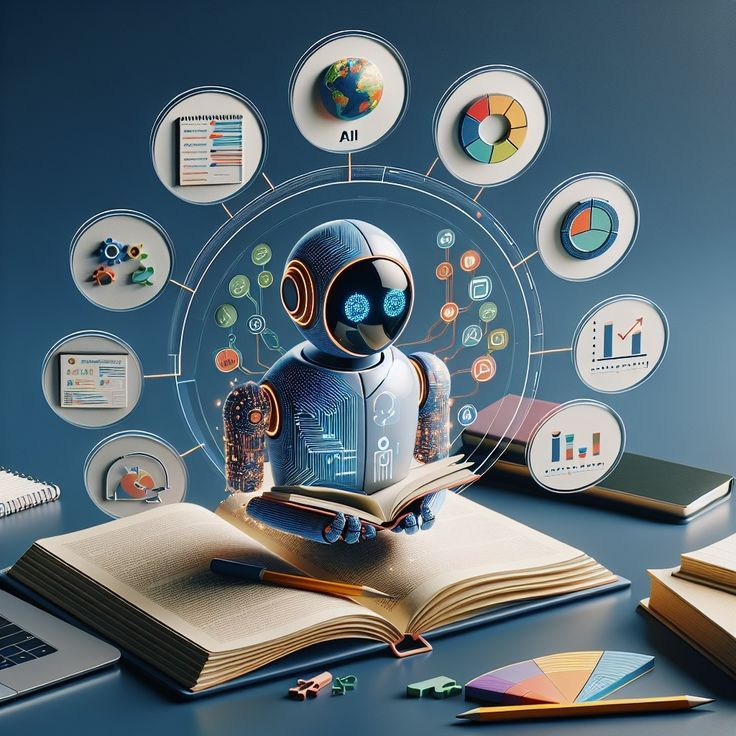
AI is already embedded into much of what we see and do online, from title recommendations on streaming services to accessibility features on apps, such as speech-to-text and image alt-text. Many organizations are increasingly using AI in their social media marketing strategies, especially for content creation, optimization, data analytics, and streamlining customer service pain points.
While most marketers are already implementing some form of gains can vary depending on how strategic they are with the types of tools they’re using and how they integrate them into each workflow. Understanding how to apply different AI-powered workflows to your daily tasks can help you work more efficiently while maintaining the high-quality standards your customers expect.
AI-assisted workflows, such as generative AI content creation, can help you create highly personalized copy, video, and imagery at a larger scale than you could accomplish on your own. However, it’s still important that humans monitor and edit the output to ensure the content is aligned with the brand voice and the strategic vision of the project.
AI-automated workflows are tasks you can more fully delegate to AI tools. For example, you could create an automation that tracks your brand’s mentions on social media, providing you with a daily summary and notifying you if any immediate action should be taken. This can in your day to work towards big-picture strategic goals instead of focusing on repetitive, tactical tasks.
Social Commerce Becomes More Normal Than Novel
As of 2025, as many as prefer shopping online vs live shopping in-store, and that number is only set to increase in 2026. As commerce on apps and social platforms has increased, consumer purchasing journeys have shortened, making it more important than ever that marketers consider the effect of social commerce in 2026.
Frictionless checkout will remain a key driver of conversions, leading users to choose brands that prioritize user experience (UX) and simple in-app checkout in their content strategy. Because frictionless checkouts are making conversion times near instant, conveying your product’s value must be clearly stated and seamlessly integrated into even the earliest stages of the customer journey once they land on your site.
What This Means for Careers and Skills in 2026
social SEO, analytics, and an understanding of in-app commerce are now top skills in today’s competitive job market.
Developing a deeper understanding of capabilities that align with these trends will be extremely valuable for those looking to upskill and advance their careers in 2026.
At National University, we offer a variety of and that can help busy professionals advance to the next level of their careers. to take the first step towards achieving your 2026 career goals.
Tie trends to skill demands: AI fluency, creator partnerships, social SEO, commerce, analytics.
Developing a deeper understanding of capabilities that align with these trends .
to take the first step towards achieving your 2026 career goals.
to become a trusted source that AI systems cite and summarize.
What Are Digital Marketing Trends?
Digital marketing trends are the current best practices you can use to attract, engage and convert customers online. They improve your brand’s visibility and trust to gain more and more customers. They reflect long-term shifts in consumer behavior, platform algorithms, automation tools and data privacy regulations.
In 2026, it is driven by AI-powered hyper-personalization, Generative Engine Optimization (GEO) and immersive, short-form video content. The key trends include using social commerce, privacy-focused data strategies, predictive analytics, AI for authentic content, and more. Let’s dive deeper to have a better understanding.
Unlike traditional SEO, which primarily focuses on improving rankings in search engine results pages, GEO helps content become discoverable within AI-generated responses. Businesses that combine SEO with GEO are more likely to gain visibility across both conventional search engines and AI assistants, increasing brand authority and organic reach.
Search is Changing: AI Search and Zero-Click Results
The search engines are evolving beyond traditional keyword-based ranking systems. They are now integrated with AI and are providing direct answers without clicking on multiple websites. You can see an example as or Overview. This shift is transforming SEO strategies.
Alongside Generative Engine Optimization, marketers are also adopting Answer Engine Optimization (AEO). While GEO focuses on improving visibility in AI-generated responses from platforms like ChatGPT, Gemini, and Google AI Mode, AEO helps content appear as direct answers in search engines, voice assistants, and AI-powered search experiences. In 2026, businesses should optimize content for both GEO and AEO by using clear headings, structured data, concise answers, FAQs, and authoritative information that AI systems can easily understand and cite.
This means ranking alone can not guarantee traffic. You must optimize your brand for search visibility, entity authority and structured content that AI systems can easily interpret and reference. The focus will move from “ranking #1” to become a trusted source that AI systems cite and summarize.
To improve Generative Engine Optimization (GEO), marketers should create comprehensive content, answer user questions clearly, implement structured data, build topical authority, cite reliable sources and maintain factual accuracy. These practices increase the likelihood that AI platforms will reference and recommend your content when generating answers.
Limited Edition Drops as a Digital Scarcity Strategy


You may have seen brands launching limited editions products like Nike or many watch companies. It helps them build exclusivity, urgency and premium perception. Scarcity has always influenced buying behavior, but digital platforms now amplify its impact through countdown timers, waitlists, influencer teasers and performance marketing campaigns.
It wasn’t directly a trend for every brand, but the popular ones leveraged it to remain in demand. Nowadays limited drops are no longer restricted to luxury brands. Even consumer electronics, fashion and D2C companies are using this strategy to generate hype and accelerate sales within a short window.
For example, sneaker brands often release limited drops that sell out within minutes due to digital anticipation campaigns. Similarly, many fashion brands launch capsule collections exclusively online to increase perceived value.
Inclusivity and Diversity
Inclusivity and diversity no longer belong exclusively to the HR world. In 2026 and beyond, it’s the job of the whole company to elevate and promote diversity in all of its forms, strengthen connections with customers, and foster a culture of positive social change.
Just make sure it’s not all rooted in performance and advertising. The best practices of diversity are backed with inclusive hiring practices, neutral language (don’t use too much slang or complicated terms), and even donations or investments in organizations that help uplift diverse communities. Here are just a few ways how brands can make their marketing more inclusive:
- Use inclusive language: make sure all messaging is free from slang, references, or other verbiage that discriminates against a group of people. Inclusive language should be a priority not only for your marketing, but for your job descriptions, website copy, and communication among employees.
- Choose your visuals carefully: visuals are one of the most important factors when it comes to digital advertising. Photos, graphics, and videos are a way to instantly hook the viewer and make them want to know more and feel connected to what they see. When creating any visual content, always consider such factors as race, gender, age, ability, and socioeconomic status of your audience.
- Celebrate beyond the usual holidays: it’s common to create social media content and marketing promotions around major holidays, seasons, and other events. You can do better—highlight your brand’s inclusive mindset by celebrating or acknowledging holidays focused on various diverse groups.
Social search becomes part of content planning
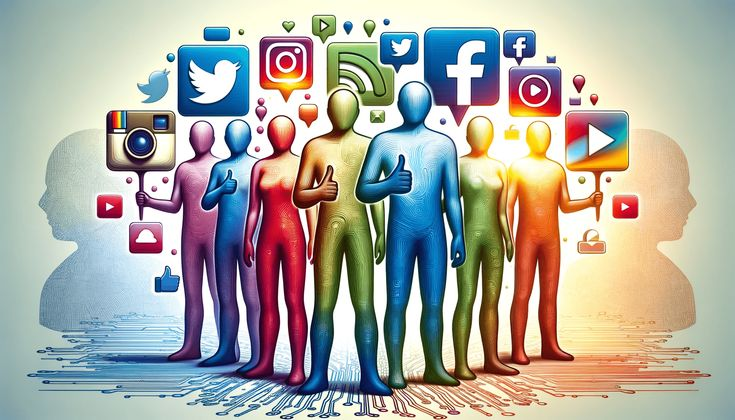
People increasingly use social platforms to find ideas, reviews, local businesses, product comparisons, and how-to answers. Search does not only happen on Google. It also happens inside YouTube, TikTok, Instagram, Pinterest, LinkedIn, Facebook, and even fast-moving conversation platforms.
For brands, this means social posts need clearer language. A clever caption can still work, but searchable captions, on-screen text, alt text, profile copy, and topic consistency matter more than before.
Proof content becomes more important than polished claims
Audiences are more skeptical of generic brand messaging. They want to see evidence: real examples, process screenshots, customer language, before-and-after stories, creator partnerships, employee expertise, and product context.
Deloitte’s 2025 Digital Media Trends describes how social platforms, creators, user-generated content, and recommendation systems have changed media and entertainment habits. For brands, that means proof often works better than slogans.
What to do
Build a proof library:
- Customer questions.
- Screenshots of workflows.
- Reviews and testimonials you have permission to use.
- Product setup examples.
- Founder or team explanations.
- Common objections and honest answers.
Short-form video works best as a series
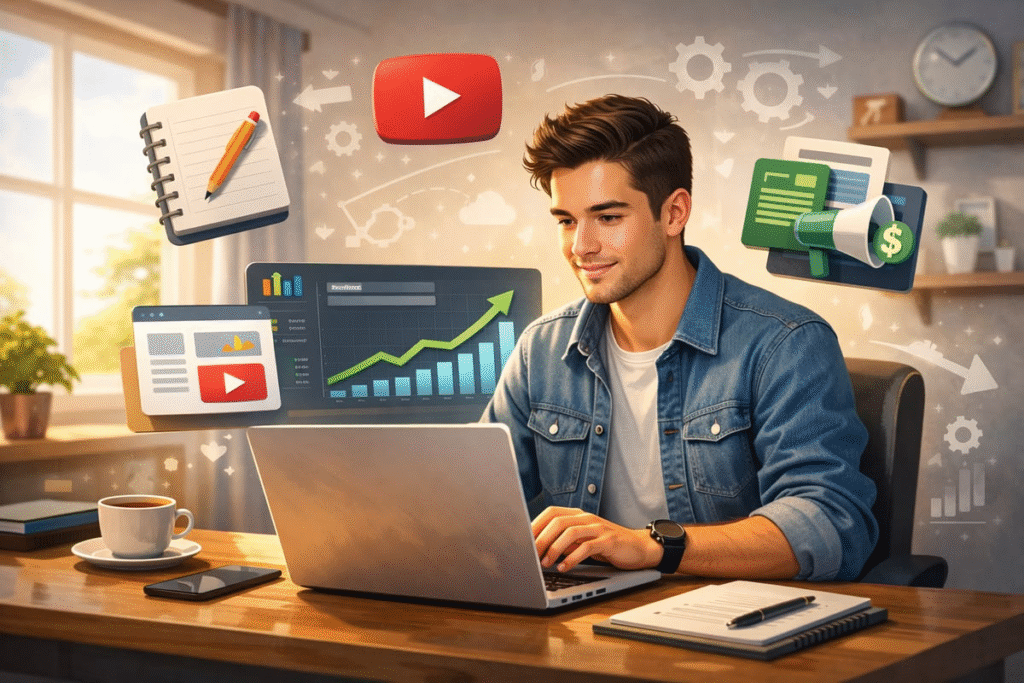
One-off videos are hard to plan and harder to learn from. Series are easier to repeat, easier for audiences to recognize, and easier to measure.
Instead of asking, “What should we post today?” ask, “What is the next episode in this series?”
Series examples
- “One mistake we fixed this week”
- “Before you buy”
- “Three ways to use this feature”
- “Customer question of the week”
- “What we would do if we were starting today”
- “Local spotlight”
- “Tool teardown”
The Big Picture: Social Media’s Scale in 2026
Social media users now make up a “supermajority” online, with 5.66 billion users worldwide — outnumbering those without social media nearly two to one. The massive scale of global social media usage in 2026 is changing how users behave and how brands should approach their online content and customer engagement strategies.
No longer just for sending messages and connecting with friends, social media is now a primary marketplace where consumers can search for their existing needs, discover new products, and complete checkouts directly from the platforms. The customer journey is condensing, meaning that marketers will need to move away from more traditional, linear paths to purchase in 2026 campaigns.
Social platforms have also disrupted the entertainment industry as more consumers are turning to short-form video and user-generated content (UGC) over traditional media. Gen Z is driving this shift, as the Wall Street Journal reports that, “Gen Zs spend 54% more time than the average consumer per day on social platforms and watching user-generated content, and 26% less time watching TV and movies.”
This is expected to continue as artificial intelligence (AI) use becomes more mainstream. Creators can now produce even more personalized content in less time, giving them an edge over other media that can take more time and resources to launch. Generative AI adoption and social media use now go hand-in-hand as consumers rapidly adapt to technological advances and emerging platforms.
Let’s look at some of the key social media trends for 2026, including AI as a default in content creation, the return of long-form video, and new business metrics you should be considering when building out your team’s key performance indicators (KPIs).