

In 2026, focusing on practical financial habits like budgeting, saving, and smart investing can make a noticeable difference, and help you build wealth steadily without feeling overwhelmed. Over time, small consistent actions can snowball into significant wealth tomorrow. Ready to take a closer look at how you can set yourself up for long-term financial growth this year? Let’s break down the habits that matter most.
choosing the right investment plan in India is no longer just about saving money. It’s about making your money work harder, smarter, and more efficiently. With evolving market dynamics, rising inflation, and a growing range of financial instruments, investors today have more options than ever before, but also more confusion.
From traditional options like fixed deposits and PPF to market-linked instruments like mutual funds, stocks, and new-age digital assets, every investment plan serves a different purpose. The challenge lies in identifying the best investment plan that aligns with your financial goals, risk appetite, and time horizon.
What is an Investment Plan?

An investment plan is a structured approach to growing your money over time by allocating it across different financial instruments based on your goals, risk appetite, and time horizon. Instead of investing randomly, a well-defined investment plan helps you stay focused, disciplined, and aligned with your goals.
One of the key purposes of any investment plan is to beat inflation. Simply saving money in low-return options may feel safe, but over time, inflation reduces the real value of your savings. An effective investment plan ensures your money grows at a rate that not only preserves its value but also increases your purchasing power.
Goal setting is at the core of a strong investment plan. Short-term goals may require safer, more liquid options, while long-term goals can benefit from higher-risk, higher-return investments like equities or mutual funds.
In 2026, with a wide range of investment options available in India, having a clear investment plan is not optional; it’s essential for making informed and confident financial decisions.
Add debt for balance and breathing room
Debt instruments are the quieter part of the plan. They rarely become dinner table stories. That is fine. Their job is to reduce volatility and give you a steady base.
Debt can also give you cash to rebalance when equity falls. When markets drop, the best long-term move is often to add to equity. A debt allocation makes that possible without touching emergency funds.
Debt is also useful for medium-term goals. It supports predictability when your timeline is short.
Rebalance once or twice a year

Rebalancing is a quiet discipline. It forces you to trim what has become too large and add to what has become too small.
If equity has run up and now dominates the portfolio, risk has increased even if you feel happy. Rebalancing brings risk back to your chosen level.
If equity has fallen and your equity share is now low, rebalancing pushes you to buy when it feels uncomfortable. That discomfort is often the point.
Do this on a fixed schedule. Do not do it daily. Once or twice a year is enough for most investors.
How to pick your equity route without overthinking
If you are new, start broad. An index fund gives you the market in one box. You are not betting on one manager, just on the economy’s long run. If you prefer active funds, pick one with a long, steady record and a style you understand, then stick with it. Avoid collecting five funds that all buy similar large companies. That looks diversified but behaves like one bet.
Track one thing monthly: Are you investing the planned amount? Returns will follow later. The habit comes first.
The best investment plan for wealth creation in 2026 is the one that keeps you consistent. It respects time and risk appetite.
Pick a simple asset mix. Automate it. Rebalance calmly. Protect the downside. Let compounding do its work.
That is how wealth is usually built.
Insurance
FINRA considers life insurance products to be investments. Insurance companies sell policies that pay out to a beneficiary if you die, as long as you keep paying your premiums. Term life insurance covers you for a specific period of time, and the premiums stay level during the guarantee period. After the guarantee period ends, your policy will stay in force, however your premiums will increase. There is no cash value to the policy, and it will only pay out the coverage amount if the insured individual dies while the policy is still in force. Permanent life insurance policies come with a cash value and fall under 2 subcategories: whole life and universal life. One of the major draws of universal life is flexible premium arrangements that may allow you to skip premiums as needed as long as your cash value is high enough to keep your policy in force.
Diversify with index funds
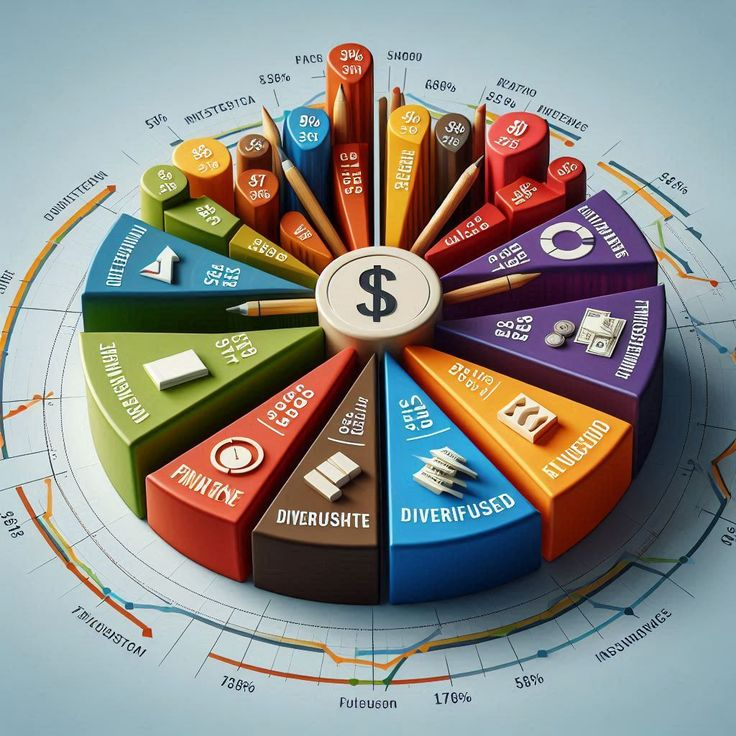
Sonnenfeldt explains that many wealthy investors turn toto access the public markets without the complexity of Index funds are designed to track a benchmark index like the When you invest in an index fund, your money is spread across all the companies in that index, which helps diversify your portfolio more than buying single stocks would.
For example, the S&P 500 includes 500 of the largest U.S. companies.
Investing in an S&P 500 fund means your returns reflect the overall performance of these major players.
Because index funds aim to replicate their benchmark’s holdings, they tend to carry less risk than owning a handful of individual stocks.
Historically, indices like the S&P 500 have generated solid average returns over time, around 10% annually, though it is important to remember that past performance does not guarantee future results.
Government bonds
Bonds can offer investors a relatively safe form of fixed income. A government bond is a loan to a government entity (such as the federal or municipal government) that pays investors interest over a set period of time, typically one to 30 years. Because of that steady stream of payments, bonds are known as fixed-income securities.
Government bonds are virtually a risk-free investment, as they’re backed by the full faith and credit of the U.S. government. “Bonds offer a ballast to a portfolio, usually going up when stocks go down, which enables nervous investors to stay the course with their investment plan, and not panic sell,” says Delia Fernandez, a certified financial planner and founder of Fernandez Financial Advisory in Los Alamitos, California.
The drawbacks? In exchange for that safety, you won’t see as high a return as you might with other investments. If you were to have a portfolio of 100% bonds (as opposed to a mix of stocks and bonds), it would be substantially harder to hit your retirement or long-term goals.
Public Provident Fund (PPF)
Public Provident Fund or PPF is a risk-free long-term investment option. It is a government-backed investment scheme that allows you to make regular investments every year and earn fixed returns on your investments. You can open a PPF account with an eligible bank or a post office and start investing to earn guaranteed returns.
Investment in a PPF comes with a lock-in period of 15 years.
The rate of return for PPF is revised by the Government of India every year. Also, the investments made towards a PPF account are eligible for tax* deductions of up to ₹ 1.5 lakh subject to conditions under section 123 (read with Schedule XV, Sr. No. 1, 2, 4 & 5) of the Income Tax Act, 2025.
Types of investments


According to the Financial Industry Regulatory Authority (FINRA), there are 11 different types of investments.
1. Stocks
A stock represents partial ownership in a company. Investors potentially make money from stocks through periodic dividend payments (portions of company profits paid out to shareholders) and share appreciation, when an investor sells shares for more than they paid for them.
2.Bonds
A bond is like a loan an investor (bondholder) makes to a borrower (bond issuer). Bondholders receive periodic interest payments from the bond issuer, based on the bond’s coupon rate, or annual interest rate. Common types of bonds include:
3.Exchange-traded funds (ETFs)
An ETF is an investable fund, containing many investments, such as stocks or bonds. ETFs are generally organized around a theme, strategy, or exposure, like tracking the performance of an index, such as the S&P 500®1 or Nasdaq composite,2 which are each groups of large publicly traded companies. Approximately half of ETFs today are actively managed, meaning the fund manager actively selects and trades portfolio securities with the goal of outperforming a specific market benchmark or index. ETFs trade on an exchange like a stock, so the share price could change throughout the day.
4.Mutual funds
A mutual fund is a collection of assets bought with pooled investor money. Like an ETF, the fund’s components are generally centered on a goal or strategy, such as outperforming or mimicking the performance of an index, like the S&P 500. But they trade differently and have different tax rules than ETFs.