
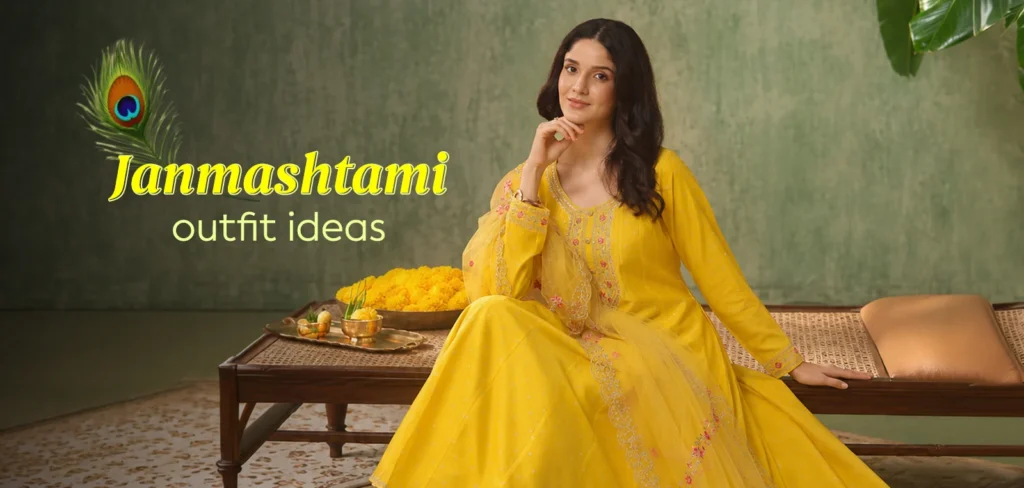
Janmashtami offers an amazing chance to try on a traditional Indian outfit inspired by Goddess Radha, and Bollywood stands as a perfect platform for the ethnic inspiration. From different types of sarees to elegant lehengas and beautiful anarkalis, Indian celebrities have always been extremely successful in their attempts to create trendy ethnic looks that are inspired by the Dvapara Yug. Let’s take a look at some.
Chances are, you can already see the iconic palette: peacock blue, radiant yellow, lush green, ivory, and subtle hints of gold. Add a peacock feather, a flute, and that unmistakable celebratory warmth, and you have a color story that has defined for generations.
Here’s the best part: you don’t need to dress like Krishna to dress for Janmashtami.
You can borrow these traditional shades, remix them with modern silhouettes, and create an outfit that feels completely like you. Whether you’re heading to a midnight aarti, joining family bhajans, or celebrating at home, here is your quick guide to building a festive look with an effortless modern twist.
Temple visits: modest, respectful and festive
For many families, Janmashtami begins with a temple visit. The atmosphere is devotional, the crowds can be large, and the time spent standing or sitting on the floor may be long. The outfit should feel respectful, modest, and comfortable enough for several hours.
For women
Temple dressing for Janmashtami is traditionally modest and festive. Covered shoulders, lengths at or below the knee, and fabrics that are not sheer are ideal for entering the sanctum. A dupatta you can use to cover your head is also useful.
Good options include:
- A in peacock blue, yellow, green, or white. These colors are closely associated with Lord Krishna and feel especially appropriate for the occasion.
- An with a full-length kurta and dupatta. This silhouette is comfortable for long hours and easy to manage during puja.
- A with a churidar or palazzo and a modest neckline. Cotton, chanderi, or mul blends work well for August weather.
- A in a lighter fabric if the temple event is more formal or part of a larger celebration.
Footwear should be easy to remove and comfortable for walking and standing. Flat or low-heeled sandals are more practical than stilettos for long temple visits. Keep jewelry minimal and secure, so it does not get in the way during darshan.
What Should Women Wear for Krishna Janmashtami?
The right outfit depends largely on where the day is being spent. For a temple visit, something modest, breathable, and easy to manage while sitting or standing in a crowd works best – a complete linen set like the Vanya Linen Kurta Set covers this without any extra styling effort.
For a home puja, there’s a little more room to bring in detailing or a bolder colour, since the setting is more relaxed – a playful pick like the Ace of Spades Baby Pink Kurta Set fits well here.
For an evening celebration or family gathering, a statement silhouette like the Boho Banno Fuchsia Linen Cape Set or the slim, gota-trimmed Patola Poise Navy Blue Kurta Set, dressed up with jewellery, brings in a more festive, photograph-ready look.
For a look that mixes print with structure, the Katya Sea Green Kurti Set works well for a livelier daytime gathering too, while The Iris Navy Blue Linen Dress is an easy, single-piece option for the quieter days around the festival.
Across all settings, the fabric matters as much as the silhouette. Linen stays breathable through a long day, which is why it works for every occasion type Janmashtami involves – not just one.
The right outfit depends largely on where the day is being spent. For a temple visit, something modest, breathable, and easy to manage while sitting or standing in a crowd works best – a complete linen set like the Vanya Linen Kurta Set covers this without any extra styling effort. For a home puja, there’s a little more room to bring in detailing or a bolder colour, since the setting is more relaxed – a playful pick like the Ace of Spades Baby Pink Kurta Set fits well here.
For an evening celebration or family gathering, a statement silhouette like the Boho Banno Fuchsia Linen Cape Set or the slim, gota-trimmed Patola Poise Navy Blue Kurta Set, dressed up with jewellery, brings in a more festive, photograph-ready look. For a look that mixes print with structure, the Katya Sea Green Kurti Set works well for a livelier daytime gathering too, while The Iris Navy Blue Linen Dress is an easy, single-piece option for the quieter days around the festival.
Across all settings, the fabric matters as much as the silhouette. Linen stays breathable through a long day, which is why it works for every occasion type Janmashtami involves – not just one.
Why Choose Yell for Krishna Janmashtami Outfits
has spent 15 years working exclusively with linen, and that focus shows in how the festive pieces are built – not just how they look. A few reasons Yell’s kurta sets are a strong Janmashtami pick:
Colour range built for the occasion – Yellow, pink, green, and blue are core, recurring shades across Yell’s kurta sets and cape collections, not one-off festive pieces.
100% linen, not blends –Every piece is made in solid or gauze linen, so the breathability that matters most on a long Janmashtami day is built into the fabric itself.
Complete, coordinated outfits – Sets like Vanya, Ace of Spades, and Patola Poise already come matched top-to-bottom, so there’s no last-minute styling required.
Handmade craftsmanship – Each piece is handcrafted in India, giving more consistency in fit and finish than mass-manufactured festive wear.
What Color to Wear on Janmashtami ?
If you’re stuck on what color to wear on Janmashtami, the shortlist is peacock blue, yellow, pink, and — if you want to go slightly off the beaten path — touches of purple or green. These aren’t random picks; they trace back to Krishna, Radha, and the peacock feather that shows up in so much Janmashtami imagery.
Peacock blue is the most obvious nod to Krishna’s peacock-feather crown, and a blue kurta set or an embroidered Anarkali with gold jewellery looks right at home at any Janmashtami event. Yellow shows up constantly in depictions of Krishna, so a yellow cotton or lightly embroidered kurta set works beautifully for daytime pooja. Pink and magenta lean into Radha’s presence in the story — pair either with a contrasting dupatta or a set of traditional jhumkas for a softer, more feminine finish. And if you’d rather skip the obvious choices, purple and green bring something a little different to the table; just keep the embroidery restrained and let the colour carry the look. Honestly, there’s no single “correct” answer here — but if you’re still torn on what color to wear on Janmashtami, blue is the safest, most symbolic bet.
Styling Details That Round Out What to Wear on Janmashtami
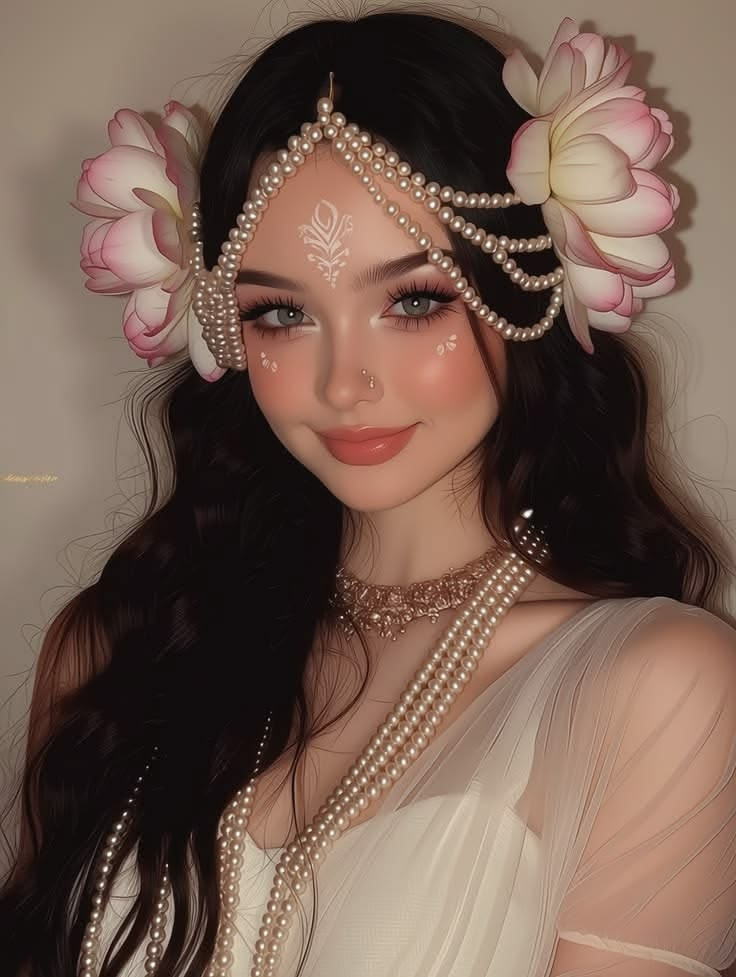
Jewellery is where you can really tie a look together — jhumkas, bangles, pearls, or delicate temple jewellery all work, just try to match the weight of the jewellery to how detailed the outfit already is. Footwear matters more than people expect on Janmashtami; juttis, festive flats, kolhapuris, or low block heels will get you through long stretches of walking or standing far better than anything with a thin heel. For hair, braids, a low bun, soft curls, or a small floral accessory keep things neat without feeling overdone. Makeup can stay simple too — a fresh base, kajal, a soft lip colour, and a small bindi go a long way, with heavier makeup better saved for indoor evening functions. As for the dupatta, a one-shoulder drape, a pleated style, or a neatly pinned option all work, though if you’re heading into a Dahi Handi crowd, pin it securely — you don’t want to be chasing it through a crowd.
Janmashtami Outfit Ideas Worth Trying
Here’s where the actual outfit picks come in — a mix of Janmashtami outfit ideas that look festive without punishing you for wearing them all day.
A peacock blue kurta set, ideally with some embroidery or gold detailing, works well across pooja, temple visits, and the evening celebrations. If you’re headed to a family gathering or the midnight aarti crowd, an Anarkali set brings a graceful flare that photographs beautifully and moves easily. For something a bit more detailed, look at kurta sets with zari, threadwork, or mirror work — just keep jewellery minimal since the outfit is already doing the talking. If you’ll be on your feet a lot (hello, Dahi Handi), an A-line kurta paired with palazzos and a light dupatta gives you room to actually move.
Mixing yellow and pink is a nice nod to the Radha-Krishna theme, especially with a floral or contrast dupatta pulled in to tie it together. Heading into the office for a smaller celebration? A straight kurta set in subtle embroidery, worn with minimal jewellery and comfortable shoes, hits the right note without overdoing it. And don’t underestimate plain cotton ethnic wear — it’s the most forgiving option for fasting days and warm weather, especially if you pick a festive print so it doesn’t read as too plain. Co-ord sets round out the list nicely too; an ethnic print with statement earrings can feel just as festive as a full traditional set, minus the fuss.
House of Kari’s Festive Clothing
Festive wear doesn’t always have heavy embroidery and tight-fitted clothes, sometimes it’s all about flowy silhouettes and pastel shades.
At House of Kari, we have brought to you a wide range of chikankari and contemporary clothing that is ideal for daily wear as much as it’s suitable for festive wear.
Can you really imagine owning clothing that can be styled for different occasions? Without losing the essence – comfort and artisanal touch.
So, why wait when you can grab your favourite piece of clothing set from our official website?
Janmashtami Celebrations at Home
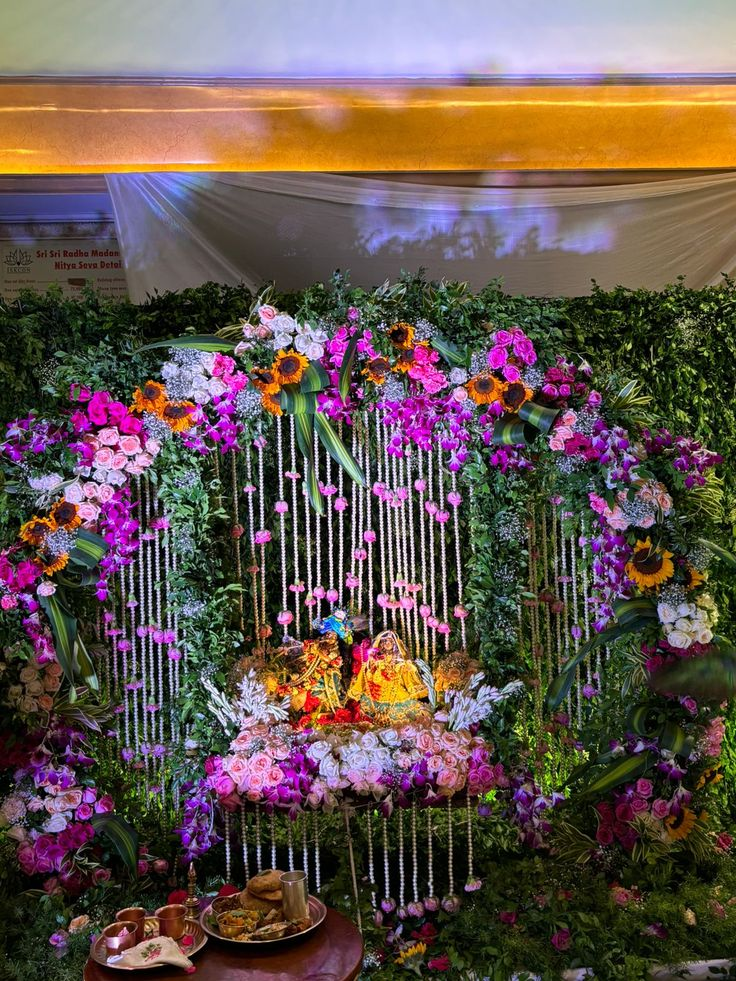
For many families, the heart of Janmashtami is at home.
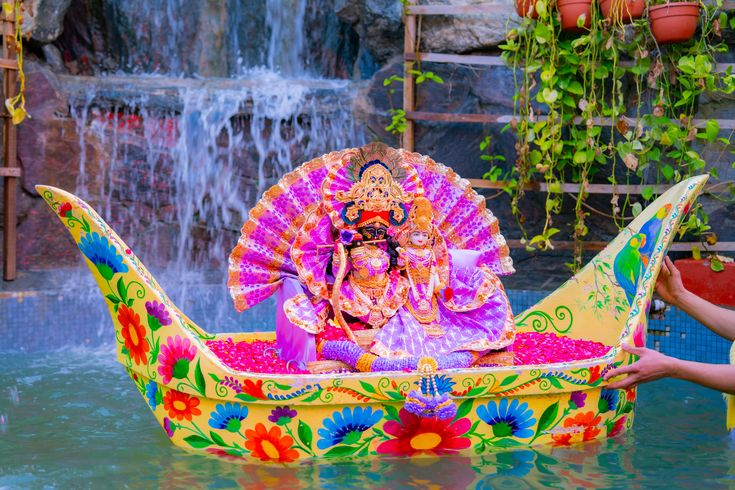
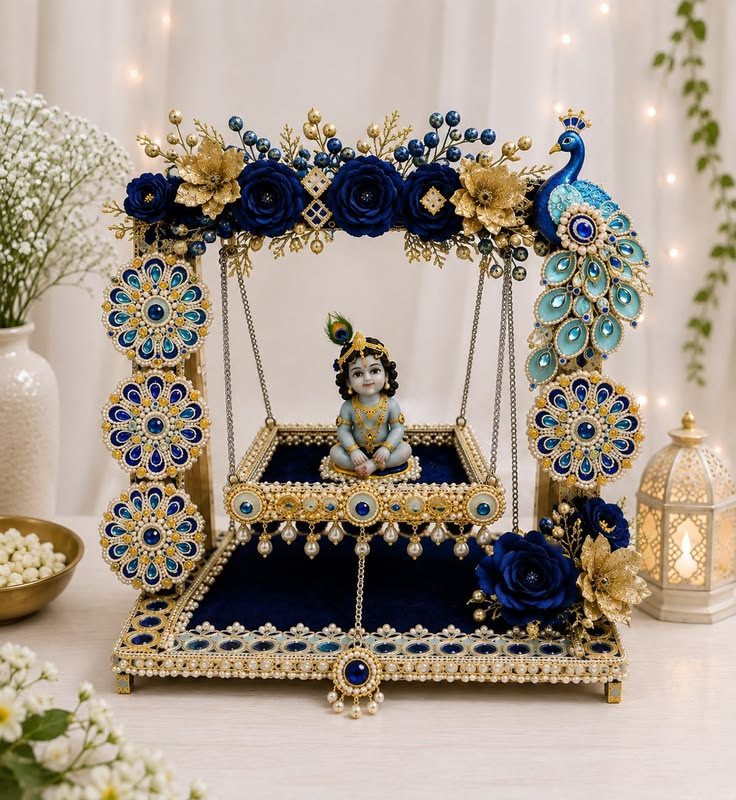
A small Krishna idol or jhula becomes the centre of the decoration. Flowers, peacock feathers, rangoli, diyas and colourful fabrics can transform a simple space into a festive corner.
Families may also prepare traditional offerings and gather together for prayers at midnight.
Simple ideas such as these can make the celebration feel personal:
- Create a small Krishna jhula with flowers and fabric.
- Decorate the puja area with diyas and rangoli.
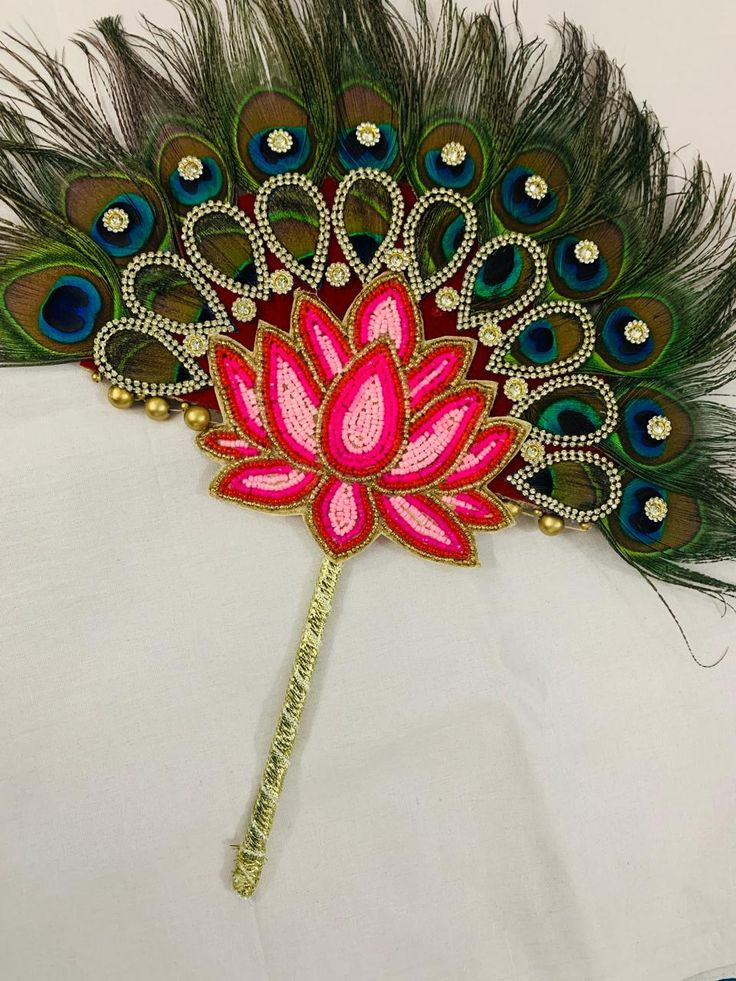
- Use peacock feathers as part of the Krishna theme.
- Prepare tr
Dahi Handi Celebrations
Dahi Handi is another well-known part of Krishna celebrations, particularly in Maharashtra and several other parts of India.
Inspired by the playful stories of young Krishna and his love for butter, groups form human pyramids to reach and break a pot filled with curd or other offerings.
The atmosphere around Dahi Handi celebrations is completely different from a quiet home puja — energetic, colourful and filled with community spirit.
Children and Little Krishna Celebrations
Janmashtami is especially exciting for children.
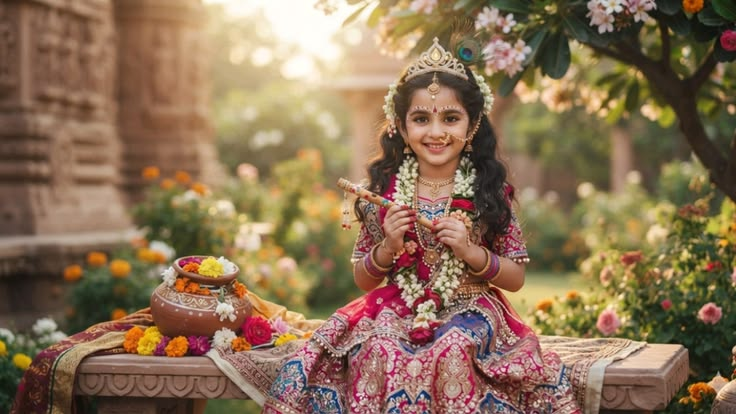
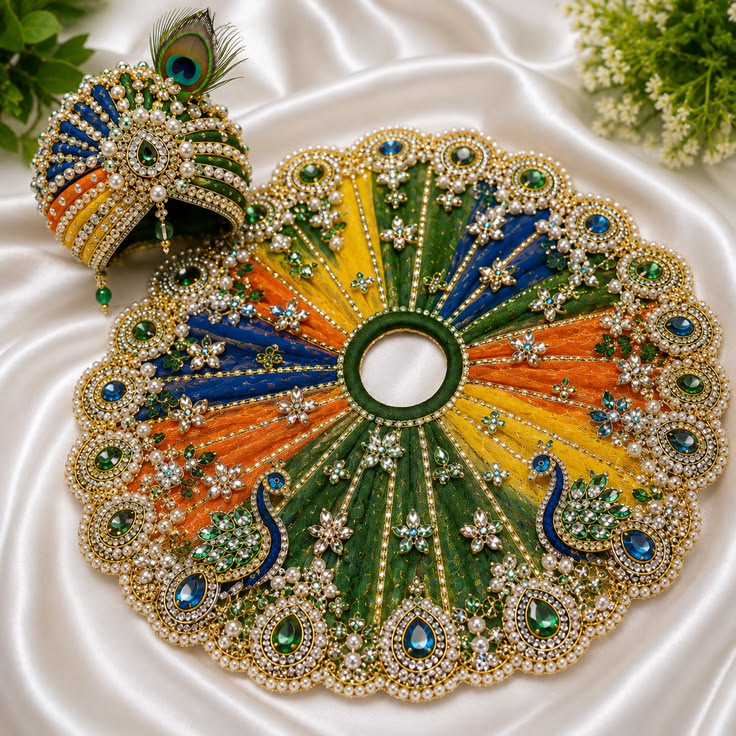
Many parents dress their children as Krishna or Radha, complete with traditional clothing, jewellery, peacock feathers and playful accessories.
Schools and communities also organise Krishna-themed performances, competitions and cultural programmes.
These are often the moments families remember long after the festival is over.
Janmashtami Jewellery: Finding the Balance Between Tradition and Modern Style
Festive jewellery does not always have to be heavy or elaborate.
Modern Indian women are increasingly choosing jewellery that combines traditional elegance with designs they can continue wearing after the festival.
That makes an interesting choice for Janmashtami.
A pair of diamond earrings can add sparkle to a saree without overwhelming the look. A delicate pendant can work beautifully with an Anarkali, while a simple diamond ring or bracelet can complement a more minimal festive outfit.
FAQ’s
1. What are the best traditional outfits for Janmashtami in 2026?
Popular choices include sarees, lehengas, Anarkali suits, salwar suits, kurta-pajamas, and dhoti-kurtas.
2. Which colors are best for Janmashtami outfits?
Yellow, blue, white, green, and saffron are popular festive colors for Janmashtami celebrations.
3. What should women wear for Janmashtami?
Women can wear traditional sarees, lehengas, salwar suits, Anarkali dresses, or other elegant ethnic outfits.
4. What should men wear for Janmashtami?
Men can choose kurta-pajamas, dhoti-kurtas, Nehru jackets, or embroidered ethnic wear.
5. Can children wear traditional outfits for Janmashtami?
Yes, children can wear traditional outfits inspired by Lord Krishna and Radha, making them perfect for festive celebrations and school events.