
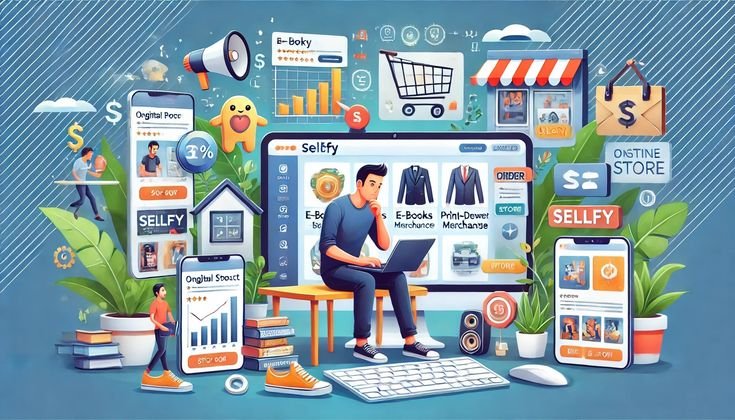
Social Media in 2026 is a different animal from the early 2000s social platforms. What was once an avenue for connecting with close friends and family is now a primary layer of the internet, powering thousands of jobs and shaping culture in real time.
In this guide, we’ll discuss what’s next for social media platforms as the digital landscape continues to evolve, as well as how you can navigate the latest social media trends, such as AI-assisted content creation and targeting, creator-led credibility, and social platforms acting as search engines.
How AI Is Changing Social Media Marketing
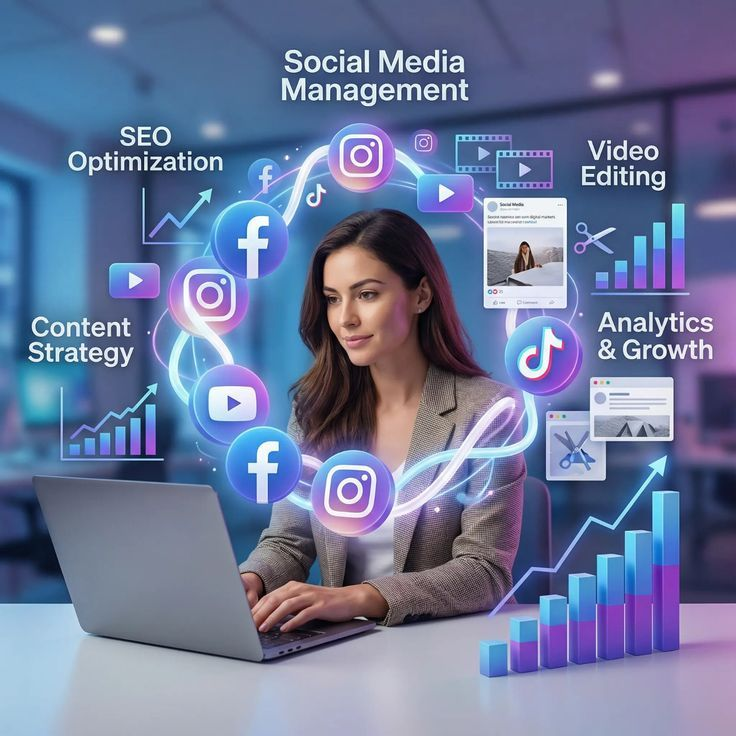
As you probably already know, social media marketing has become faster, more competitive, and more data-driven than ever before.
Instead of spending hours brainstorming posts, manually publishing content, and digging through piles of analytics, marketers are using AI to simplify the behind-the-scenes work.
AI in social media helps teams create content more quickly across platforms, uncover valuable data points faster, and make smarter decisions backed by actual performance metrics.
The result is less time spent managing tasks and more time spent building worthwhile strategies.
As you probably already know, social media marketing has become faster, more competitive, and more data-driven than ever before. Instead of spending hours brainstorming posts, manually publishing content, and digging through piles of analytics, marketers are using AI to simplify the behind-the-scenes work.
AI in social media helps teams create content more quickly across platforms, uncover valuable data points faster, and make smarter decisions backed by actual performance metrics. The result is less time spent managing tasks and more time spent building worthwhile strategies.
Here’s why social media managers are adopting AI in 2026:
- Growing number of social platforms
- Pressure to prove ROI
- Need for real-time optimization
- Increased publishing demands
- Rising expectations for faster content production
- Demand for more efficient workflows and automation
Best Practices for Using AI in Social Media
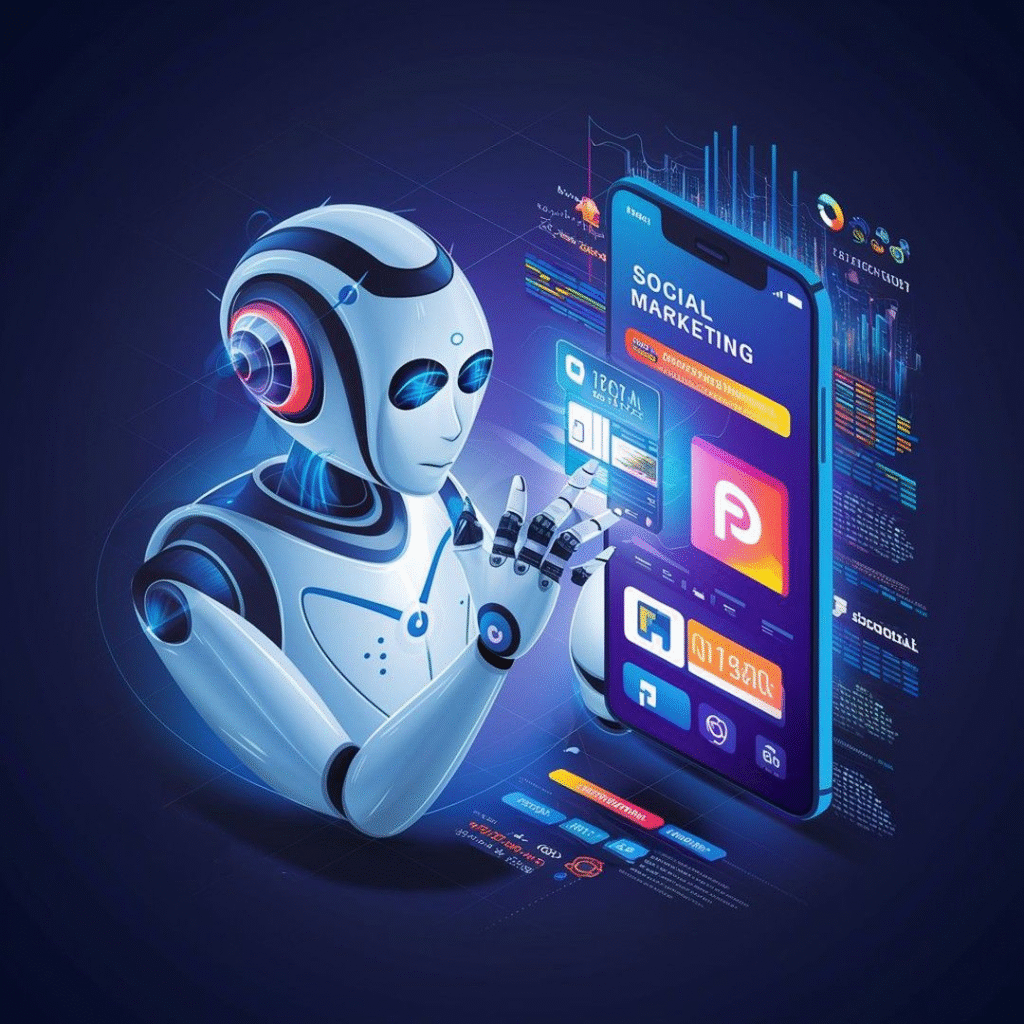
AI can be a powerful tool, but it works best when it is guided by real people. Think of AI as a tool that supports your strategy, not something that replaces your voice, standards, or responsibility. A balanced approach helps you stay efficient without losing authenticity or trust with your audience.
Here are some best practices you should follow:
Keep your brand voice personable and consistent across all content
Avoid over-automation so your social presence feels real and responsive
Fact-check all AI-generated content before it is published
Follow platform-specific AI guidelines
Improve your AI prompt writing to get more accurate outputs
Keep privacy top of mind and ensure data regulations are followed.
AI Becomes a Default Part of Social Marketing
AI is already embedded into much of what we see and do online, from title recommendations on streaming services to accessibility features on apps, such as speech-to-text and image alt-text. Many organizations are increasingly using AI in their social media marketing strategies, especially for content creation, optimization, data analytics, and streamlining customer service pain points.
While most marketers are already implementing some form of AI into their day-to-day operations, gains can vary depending on how strategic they are with the types of tools they’re using and how they integrate them into each workflow. Understanding how to apply different AI-powered workflows to your daily tasks can help you work more efficiently while maintaining the high-quality standards your customers expect.
AI-assisted workflows, such as generative AI content creation, can help you create highly personalized copy, video, and imagery at a larger scale than you could accomplish on your own. However, it’s still important that humans monitor and edit the output to ensure the content is aligned with the brand voice and the strategic vision of the project.
AI-automated workflows are tasks you can more fully delegate to AI tools. For example, you could create an automation that tracks your brand’s mentions on social media, providing you with a daily summary and notifying you if any immediate action should be taken. This can give you back more time in your day to work towards big-picture strategic goals instead of focusing on repetitive, tactical tasks.
Social Commerce Becomes More Normal Than Novel
As of 2025, as many as 59% of consumers prefer shopping online vs live shopping in-store, and that number is only set to increase in 2026. As commerce on apps and social platforms has increased, consumer purchasing journeys have shortened, making it more important than ever that marketers consider the effect of social commerce in 2026.
Frictionless checkout will remain a key driver of conversions, leading users to choose brands that prioritize user experience (UX) and simple in-app checkout in their content strategy. Because frictionless checkouts are making conversion times near instant, conveying your product’s value must be clearly stated and seamlessly integrated into even the earliest stages of the customer journey once they land on your site.
Team Sustainability and Burnout Become Strategic Risks
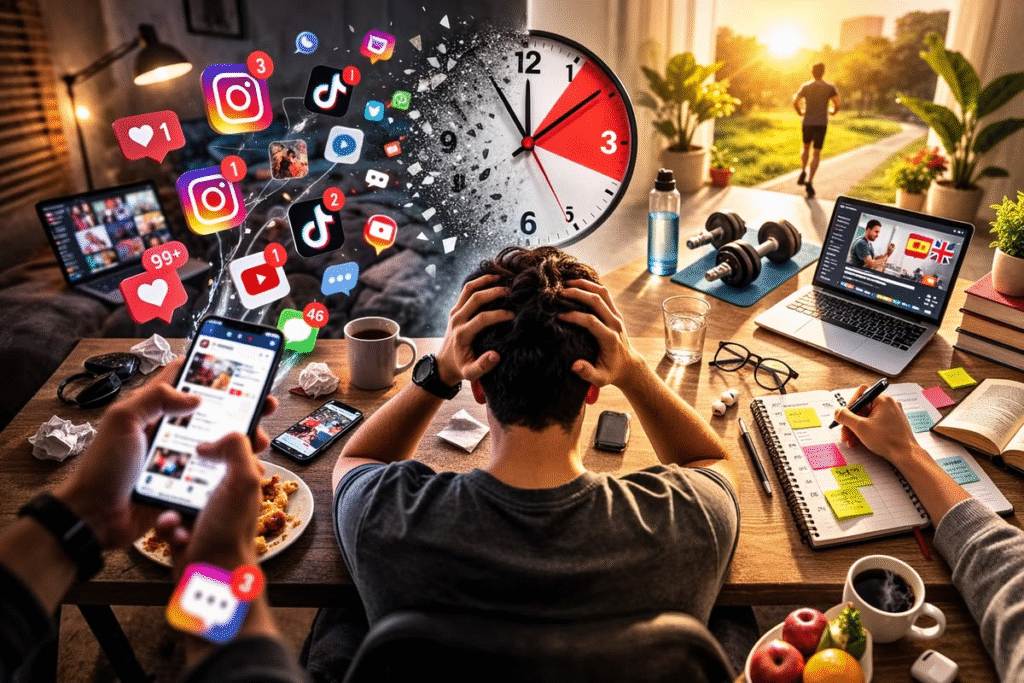
Social media team burnout is a widespread challenge going into 2026, and it can’t be cured by individual action. Combating burnout requires building sustainable content ops to support your team, scale your organization, and give them the tools to work smarter–not harder.
A major contributing factor to burnout is the relentless speed at which many marketers work. This “always on” culture can make it hard for your team to relax during their off-time, leading to exhaustion and a drop in productivity and work quality. Prioritizing operational fixes like content batching and AI support can help you accomplish tasks without as much cognitive load, creating more room for long-term strategic thinking.
You should also consider your team’s resources and develop a realistic channel-prioritization strategy. For example, if your team signs a large scope of work for a new client, you’ll likely need to pause or reimagine your marketing efforts on lower-priority channels until you’re able to hire additional support.
Success should be measured by outcomes, not outputs
How we measure social media has changed. Meta has changed all data to ‘views’ and ‘dwell time’ has become a key factor (which is why Reels and carousels are performing to highly).
Each platform has updated it’s insights – Instagram for example have added details so you can identify when and where someone likes a Carousel or Reel. Instagram has also added competitor insights (while LinkedIn have put this behind their premium subscription paywall). LinkedIn has also added detail about how a post drives profile views and new followers.
My personal wish for 2026 is that social media measures success differently — by outcomes rather than outputs. Consistently, chasing reach, or hitting impression targets can feel productive — but they don’t necessarily reflect real impact. In a crowded, noisy feed, simply publishing content is no longer enough to be noticed or remembered.
AI TRANSITIONS FROM TOOL TO TEAM MEMBER
As we forecast 2026 social media trends, it’s clear that AI won’t be used simply as a productivity booster. It’s becoming a built-in collaborator. From predicting what your audience wants to see next to speeding up content production, AI is becoming essential to SMM workflows and practically invisible to the outside.
Forward-thinking brands that we just can’t get enough of are already integrating AI across their marketing strategies.
Our team uses AI to…
- ♻️ Build reusable task templates so our team doesn’t rewrite the same workflows over and over
- 🎨 Draft graphics, hooks, and design copy when the creative spark needs a jumpstart
- 📦 Categorize content using our 4-Quadrant communication method and identify gaps in strategy
- 🤔 Break down design elements from inspo graphics so we can recreate them intentionally
- 📅 Generate client-specific holiday calendars grounded in relevance, not guesswork
- 🎙️ Write UGC scripts that feel on-brand and ready to record
What This Means for Careers and Skills in 2026
AI fluency, social SEO, analytics, and an understanding of in-app commerce are now top skills in today’s competitive job market. Developing a deeper understanding of capabilities that align with these trends will be extremely valuable for those looking to upskill and advance their careers in 2026.
At National University, we offer a variety of programs and certificates that can help busy professionals advance to the next level of their careers. Contact us today to take the first step towards achieving your 2026 career goals.
Tie trends to skill demands: AI fluency, creator partnerships, social SEO, commerce, analytics.