

Mobile banking trends 2025-2026
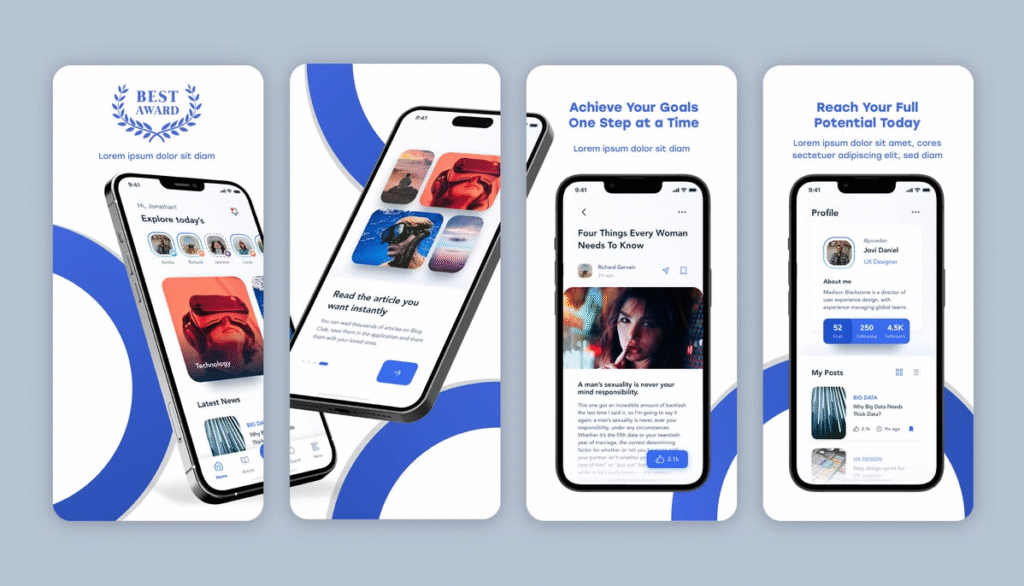
There is no field in the contemporary digitalized age where mobile devices haven’t established a firm foothold. We increasingly rely on our gizmos to learn, work, travel, obtain treatment, shop, and have fun. To keep abreast of this across-the-board advent of mobile technologies, enterprises throughout various domains launch ground-breaking digitalization transformation initiatives where mobile services become a centerpiece.
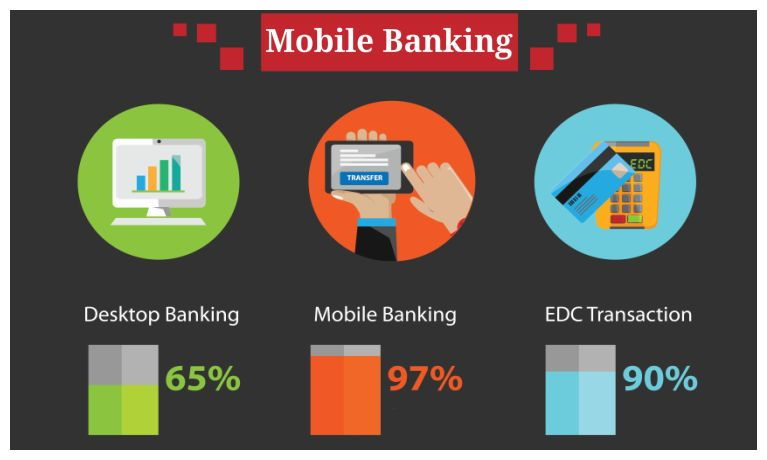
The banking industry is moving in the wake of this revolutionary process. Financial institutions of all sizes and areas of specialization offer a wide range of online banking services to consumers and develop mobile banking apps to provide an ultimate mobile banking experience for a multi-billion-strong audience of smartphone owners. And they are doing a great job! While four years ago, 1.9 billion people worldwide were active users of digital banking products, in 2024, this astounding number is expected to almost double and reach a mind-blowing 3.6 billion (according to Statista). Why are banking apps conquering the realm of banking services?
Top 3 Mobile Banking Apps In 2026
Before we finally jump into the top mobile banking trends in 2026, let us have a look at the industry’s best banking apps for further inspiration.
1. Capital One Mobile
The Capital Online Mobile app is created by one of the United States’ top banking institutions that helps users manage their bank accounts and perform other banking services like transferring money to other account holders, viewing transactions, and getting alerts about transactions that are out of the blue. The app also ranks 5th in the AppStore’s Finance category and helps users view their spending and get personalized insights to better manage it.
2. Chase Mobile
Offered by JPMorgan Chase, Chase Mobile is an intuitive app for account holders to manage their accounts and financials. For example, they can easily pay bills, earn reward points, access credit card transactions, and much more. The app also integrates with the Zelle network to allow users to seamlessly transfer money, monitor fraudulent transactions, and plan advanced budgets.
3. Monobank
Another top mobile banking app that integrates several trends in mobile banking is Monobank. The app is from Ukraine that helps open an account without much hassle, helps with seamless payments, and offers real-time customer support. Another advantage is that the app has a user-friendly interface and includes several features that help you deliver seamless banking experiences.
Better Security Features
As with AI advancements, security features are becoming more robust following the mobile industry privacy trends, offering biometric protection, extensive authorisation and other protective measures. However, these can be further improved with more accurate transaction data and AI integration:
- Advanced Biometric Authentication: Using voice recognition or advanced facial recognition for additional security layers.
- Real-Time Fraud Alerts: Instant alerts for suspicious activities, with the ability to freeze accounts immediately.
- Enhanced Privacy Controls: Giving users more control over their data, such as deciding what information third parties can access.
Mobile banking apps are also adopting new innovations to safeguard user information while ensuring compliance with global regulations like GDPR and PSD2. We are talking decentralized or blockchain-based storage solutions, end-to-end encryption enhancements or more transparent data policies that allow customers to control, restrict, and delete their personal information in compliance with GDPR and other privacy regulations.
Mobile banking apps will centralise daily life

Mobile banking has transformed dramatically over the years, evolving far beyond simple transactions. By 2026, mobile apps will be the primary way most people manage their finances – from everyday spending to long-term planning.
The rise of ‘super apps’ (platforms that combine banking with travel, healthcare, government services and more) is already starting to reshape the banking industry. This has enabled some banks to become central hubs for a wide range of services.
For example, Revolut (UK) has expanded beyond traditional banking to offer:
An AI-powered assistant for real-time financial guidance
Digital mortgages across Europe
ATMs with facial recognition in Spain
Mobile plans with eSIM technolog.
These additions have transformed their regular banking app into an indispensable tool that keeps customers engaged and connected to their finances in ways that were unimaginable a decade ago.
But building these advanced experiences can be complex and require major technical investment. A mobile banking super app might use AI to deliver real-time financial insights, augmented reality to simplify complex decisions and cutting-edge security to keep data safe. To help streamline development and scale innovation, some banks are adopting cloud-based systems and open APIs to quickly integrate new services and collaborate with third-party providers like G+D Netcetera.
Security and usability are both top priorities. So banks are using zero-trust security models, biometric logins and continuous behavior monitoring to protect customers without detracting from the user experience.
Key developments in mobile banking apps in 2026
Expanded service ecosystems where banking apps become gateways to a wide range of financial and lifestyle services
AI-powered financial wellness tools that offer personalised budgeting advice, spending insights and financial planning
Augmented reality features that help customers visualise financial decisions like mortgage options or investment growth
True omnichannel experiences that maintain context as customers move between mobile, web, and in-branch interactions
Context-aware notifications that provide relevant financial information exactly when customers need it
Personalised interfaces that adapt to individual preferences and financial situations
The pressure to innovate in mobile banking will remain intense. Fintechs and big tech companies are constantly setting higher standards, and banks that don’t keep up risk losing customers to competitors with more intuitive, feature-rich apps.
Making the case for mobile banking apps
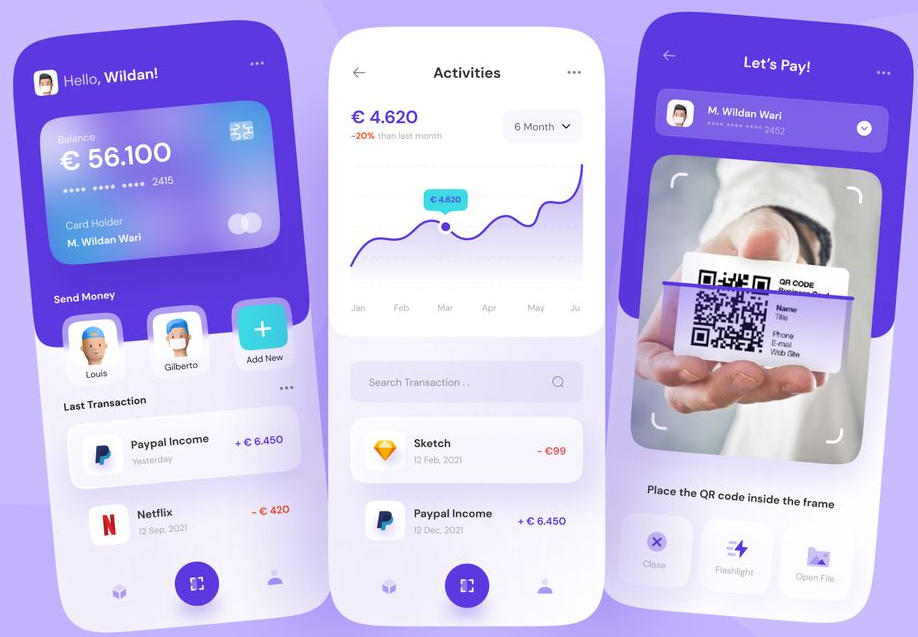
DICUES has been developing apps in the mobile banking niche for over a dozen years. Knowing this sector’s target audience inside out, we can pinpoint the pivotal reasons that have made a mobile banking app a subsistence product.
- Control over customers’ banking activities. People know that they can manage their finances 24/7, wherever they are. A banking app enables them to transfer money, check on their savings account, pay bills, monitor expenditures in their digital wallets, view transaction history, and perform other operations when they please.
- The sense of security. There is no longer a need to carry a large sum of money in your pocket, and there is no longer a fear that it can be lost or stolen. Instead of producing their wallets to pay for any product or service, account holders press a couple of buttons on their gadget’s screen and let mobile apps take care of payments.
- Time efficiency. In the past, financial affairs took a lot of time. People had to visit a brick-and-mortar branch, stand in a queue, fill out countless forms, etc., to get a loan, transfer money, or deposit a sum in their bank accounts. Now, they can do everything in a matter of minutes, if not seconds, and turn to other errands that require their close attention.
- Cost efficiency. Switching over their services online allows banks to reduce OPEX, which translates into the ability to offer clientele more competitive prices, higher interest rates, special discounts, and other financial incentives that come as a pleasant bonus to banking service consumers.
- Wide auxiliary opportunities. Accessing bank accounts or paying for groceries with your smartphone at a supermarket are bread-and-butter opportunities a finance app provides. Besides those, modern people use their gizmos to buy tickets to sports events, book a room at a hotel, pay for a taxi ride, and enjoy other services and commodities offered by third-party organizations.
Such a roster of perks explains the steady growth of the global mobile banking industry market, which crossed the $1.3 billion threshold last year and is predicted to triple by 2030, manifesting a remarkable CAGR of 15+%.
Such impressive mobile banking statistics is the best proof of the vital necessity of mobile banking app development for financial institutions with big-time aspirations. To guarantee the success of their mobile app, a far-sighted bank should pay close attention to trends in mobile banking that will carry the day in the industry in the near future.
Banking software development is one of the expertise domains DICEUS excels at. We constantly monitor the sector’s state, detecting and exploring banking trends that will shape the realm for years to come. What are the latest trends 2024 ushered in that will also stay relevant next year?
Banks will own digital identity
More of our lives are happening online than ever before. As a result, securely verifying who we are has become one of the biggest challenges in financial services. But banks are in a unique position to lead the way. With their robust systems for customer verification, fraud prevention and regulatory compliance, banks are set to become the go-to providers of digital identity services by 2026.
This shift brings clear advantages. Customers will enjoy the convenience of using their bank-verified identity across various services, making online interactions both smoother and safer. Advanced AI-powered fraud prevention systems will analyse behavior in real time, stopping suspicious activity before it causes harm. And regulations like eIDAS 2.0 further strengthen banks’ role as trusted leaders in digital identity.
Beyond security and convenience, this development opens up new business opportunities. Banks can turn their expertise in identity verification into a revenue stream by offering ‘identity-as-a-service’ to other industries. This not only creates new income streams but also strengthens customer trust and reduces fraud.
Key developments in digital identity in 2026
National digital identity schemes with banks playing a central role in verification and management
Biometric authentication becoming the standard for secure, passwordless logins
Portable digital identities that customers can use across different services and platforms
Cross-border identity solutions that work seamlessly across different countries
Fraud prevention networks that share information between financial institutions
Identity services for non-financial sectors like healthcare, government and ecommerce
The technology behind digital identity is advancing quickly. Modern systems now use behavioral biometrics, device recognition and continuous authentication to keep accounts secure without adding hassle for users. Banks, with their deep experience in secure transactions and compliance, are well placed to take the lead
How banks can leverage digital trends in 2026
The banking industry is changing fast. To stay competitive in 2026, banks need to focus on a few critical areas:
AI-driven personalisation that turns generic services into tailored financial advice
Mobile banking excellence that makes the app the primary customer interface
Embedded finance partnerships that extend banking services into new markets
Digital identity services that position banks as trusted providers
Stablecoin strategies that address the growing demand for digital assets
G+D Netcetera is at the centre of this digital shift, acting as a trusted partner for banks navigating change. Our flexible digital banking platform equips financial institutions not just to keep up with transformation, but to set the pace. We design solutions that match both customer needs and the latest trends, enabling banking experiences that are secure, smooth and built for the future.