
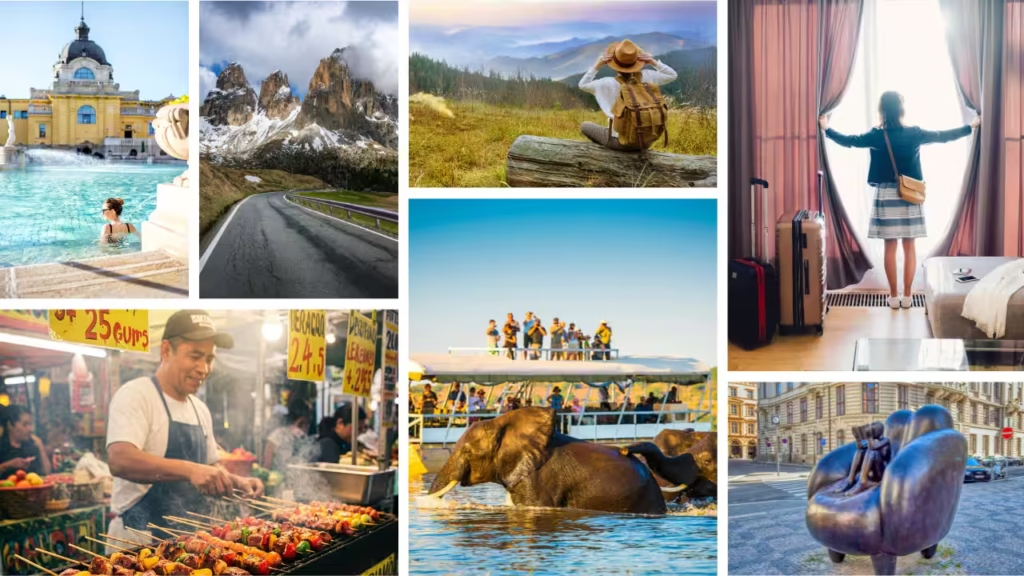
When travelers put the destination and its people at the heart of the trip, the transformation will ripple much further than a simple vacation, creating more tangible and long-lasting benefits for both the place visited and the traveler themselves.
And for many, the most transformational travel experiences involve uncomfortable moments. Perhaps in that final mile of your hike to the summit, or pushing through a moment of fear before you try a new local delicacy, or in a conversation with a ranger devoting their life to protecting endangered wildlife.
Micro-Dosing the big Retirement Trip

With state retirement age slipping ever further away, we’re seeing a surge in travellers taking longer, more ambitious itineraries usually reserved for retirement earlier, often mid-career. From multi-week treks in to slow journeys through, travellers are prioritising their bucket-list adventures now, not later.
Harnessing this increased demand for mid-career adventures, Explore’s Find Your Perfect Micro-Retirement tool matches travellers with the right sabbatical for them, proposing the perfect age and destination for your mid-career adventure.
Explore customers booking trips of more than 8 days has grown 19% since last year, showing a clear appetite for longer, slower travel experiences. Explore’s new-for-2026 enables travellers to save 5% when they book two (or more) trips back to back.
Family Milestones: Last-Chance Adventures & Family 2.0
As children grow older, we become ever more aware just how fleeting those family years are. Parents with teens in their late years of school are increasingly seeking that one final, epic adventure before their kids fly the nest. These milestone trips are designed to celebrate the end of exams, tick off bucket-list destinations, and create memories that will last a lifetime. From safari in Africa to exploring the wilds of Borneo, these journeys are less about routine holidays and more about once-in-a-lifetime experiences together.
At the same time, we’re also seeing a rise in what we call Family Holidays 2.0. With many young adults in their 20s still living with their parents or returning to the family home after uni, and often unable to fund big trips independently, parents in their 50s and 60s are inviting their grown-up children along on adventures. These trips offer a new dynamic: rediscovering family travel as adults, sharing experiences as equals, and often introducing young adults to small group adventure for the first time. For many, these shared experiences and paid-for holidays are the new ‘inheritance’.
Whether celebrating endings, marking new beginnings or simply carving out time together in busy lives, milestone family adventures reflect how the meaning of ‘family holiday’ evolves — but remains as powerful and important as ever
Tirthan Valley, Himachal Pradesh: Best Nature Stay in the Himalayas
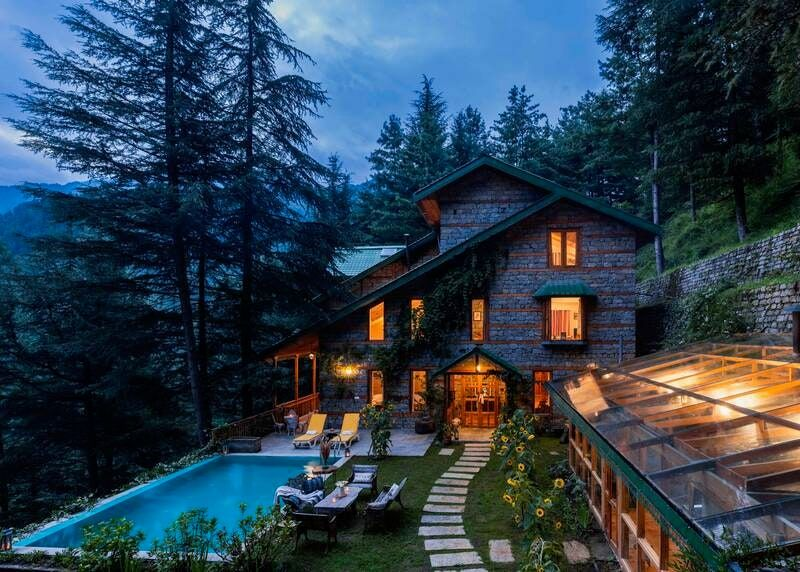
Tirthan Valley in the Kullu district of Himachal Pradesh is one of those places that rewards people who are willing to look slightly beyond the obvious hill station circuit. The valley takes its name from the Tirthan River, which originates inside the Great Himalayan National Park, a UNESCO World Heritage Site covering 754 square kilometres of protected high-altitude terrain. The river runs cold and clear through the valley, and one of the more unusual things to do in Tirthan Valley is trout fishing in its waters.
Fishing permits can be arranged through the Fisheries Department in Gushaini village, and catch-and-release is standard practice. The valley has over 200 recorded bird species, including the Western Tragopan, one of the rarest pheasants in the world.
The nature stays in India category has very few options that feel as unhurried as a riverside homestay in Tirthan. The villages of Gushaini, Ropa, and Jibhi each have small family-run cottages where guests typically eat with the hosts, walk to nearby waterfalls in the morning, and spend evenings by a bonfire. There are no malls, no loud markets, and no crowds. The best time to visit Tirthan Valley is April to June and September to November, when the trails into the national park are open and the river is in its most photogenic state.
Pachmarhi, Madhya Pradesh: India’s Only Hill Station With a Biosphere Reserve
Pachmarhi sits at 1,067 metres above sea level in the Satpura Range and holds the distinction of being the only hill station in Madhya Pradesh. Its name comes from the Sanskrit words for five caves, referencing the ancient rock shelters in the area. What makes it stand apart from the typical hill station is the fact that it sits inside a UNESCO Biosphere Reserve, which means the forest cover, wildlife, and ecological rules here are far stricter than at most popular mountain destinations in India.
The Satpura National Park, which surrounds the town, covers 524 square kilometres of sandstone peaks, dense sal forests, narrow gorges, and deep ravines. It is home to tigers, leopards, Indian gaur, sloth bears, and the giant squirrel. Walking safaris are permitted in certain zones here, which is something most tiger reserves in India do not allow. Dhoopgarh, the highest point in the Satpura Range, is famous for a 360-degree view that works equally well at sunrise and sunset. The Bee Falls, which supply drinking water to the entire town, are unusual in that they are one of the few waterfalls in India you can actually walk behind. have grown in number in recent years, with forest-facing cottages available on the outskirts of town. The best time to visit Pachmarhi is October to March, when the air is cool and the forest paths are at their most walkable.
Mudumalai, Tamil Nadu: The Oldest Wildlife Sanctuary in South India
Mudumalai was established in 1940, making it the oldest wildlife sanctuary in South India. The name means “ancient hills” in Tamil, and the forest is believed to be roughly 65 million years old, formed when the Western Ghats rose from the sea. It sits at the point where the borders of Tamil Nadu, Karnataka, and Kerala meet, sharing habitat with Bandipur Tiger Reserve to the north and Wayanad Wildlife Sanctuary to the west. This tri-state position makes Mudumalai part of one of the largest connected forest blocks in peninsular India.
One fact that surprises most visitors is that Mudumalai has the highest density of Asian elephants in Asia. Elephant herds are commonly seen near the road, especially in the early morning. The park also has 266 documented bird species, including several endemic to the Western Ghats. Nature stays in India near Mudumalai range from simple forest-adjacent guesthouses in Masinagudi to more structured jungle lodges on the Sigur Plateau. The best time to visit Mudumalai is October to March, when wildlife congregates near water sources and the forest roads are in good condition.
Wellness Travel: The Pursuit of Health and Rejuvenation
In the year 2026, travel will not be about discovering new destinations; it will purely be about discovering one’s own self as far as health and well-being go. Wellness tourism is said to be booming into very fine lines. Mental, physical, and emotional rejuvenation will be factors of consideration. It will include meditation retreats, yoga vacations, and detox programs offered at places like Bali and the Maldives’ tranquil shores. Most wellness seekers in travel will even find a good Dubai package or Thailand package that usually encompasses relaxation, luxury, and fitness experience in some of the most peaceful environments available.
Off-the-Beaten-Path Destinations: Seeking Authenticity
As traditional tourist spots become overpopulated with tourists, people are increasingly turning to lesser-known travel destinations that promise unique experiences. New Zealand will be one of the countries to receive international fame, along with a part of Eastern Europe, by 2026, because visitors will regard these parts of the world as New Realms in terms of untouched landscapes, rich cultures, and real experiences. The result will be more intimate and personalized trips to places where it’s possible that one can go outside the commercial tourism line and see a more local way of life. These hidden gems will be snapped up by all those searching for authenticity and quieter retreats.
Transformational Travel: Exploring Identity and “Feeling Different”

Travel in 2026 is no longer just about ticking off destinations; it’s about transformations that stem from deep exploration.
At Elevate Destinations, we have seen firsthand how travelers are looking for meaningful trips that speak to their identity, values, and inner curiosity. They’re seeking experiences that go beyond sightseeing and instead transform how they understand themselves, the world around them, and ultimately their place within it.
Although how this looks depends on each traveler’s interests, budget, and the time they have available, whether embracing a physical challenge, immersing oneself in nature and wildlife, or learning a new skill through cultural exchange.
It might be a very special solo trip to Uganda to spend time in the presence of mountain gorillas: investing attention and time, as well as funds, to support conservation through thoughtful local tourism. Or it could be trekking to remote villages in Nepal, fully immersing in the local culture, or visiting Reteti, a first-of-its-kind locally managed elephant rescue as part of a safari in Kenya.
When travelers put the destination and its people at the heart of the trip, the transformation will ripple much further than a simple vacation, creating more tangible and long-lasting benefits for both the place visited and the traveler themselves.
And for many, the most transformational travel experiences involve uncomfortable moments. Perhaps in that final mile of your hike to the summit, or pushing through a moment of fear before you try a new local delicacy, or in a conversation with a ranger devoting their life to protecting endangered wildlife.